
I am working on a family history of the Rooney family in Rochester, NY. I am using public records, family documents, and more to build this.
I am using Claude AI to piece together all of the documents and connections between people. All of the text below is output from Claude with very minor manual edits from myself.
The Rooney Family:
From County Sligo, Ireland to Rochester, NY by way of Auburn, PA
Last Updated Oct 14, 2026
Ireland: County Sligo, before 1840
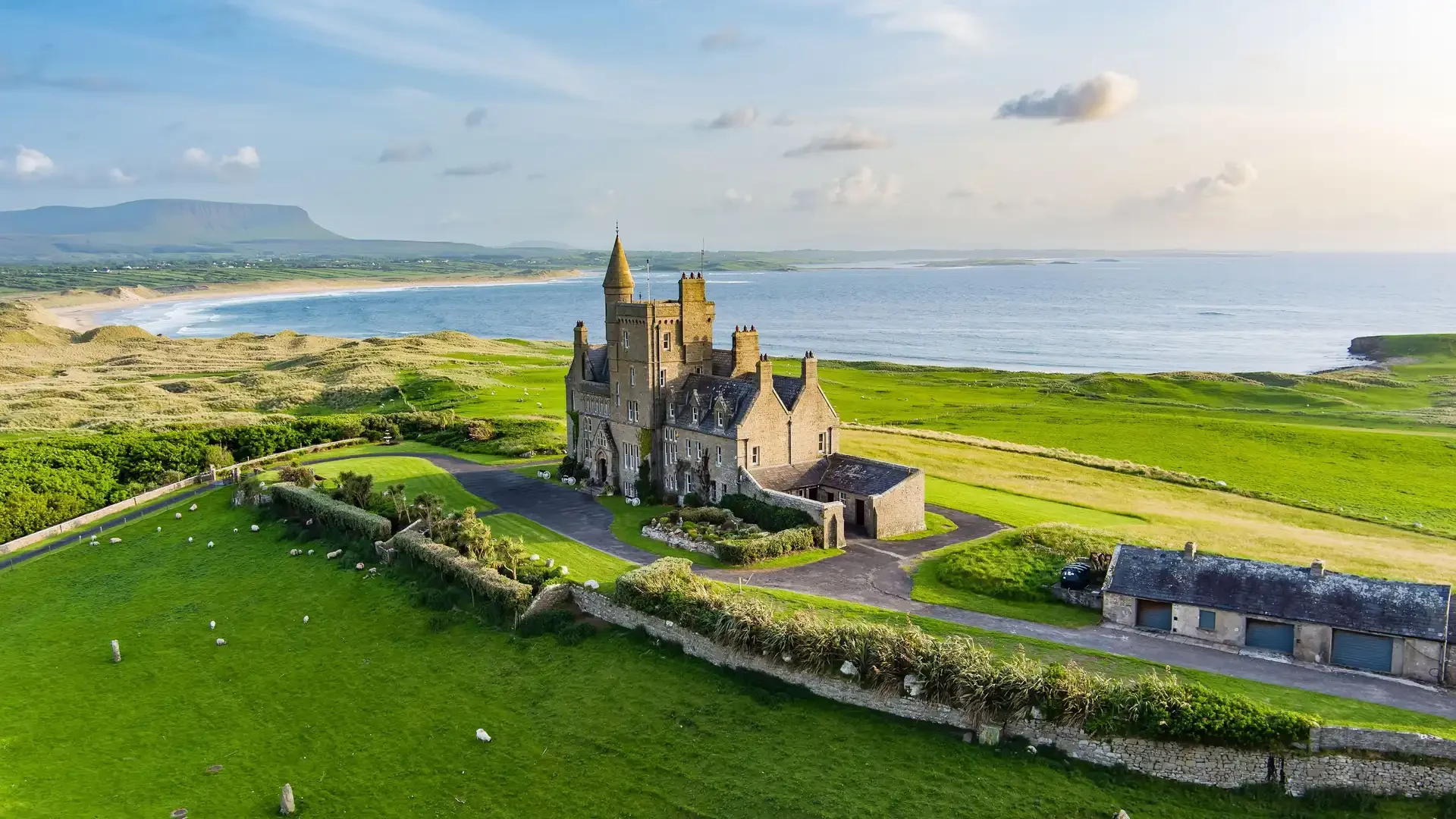
The family's story begins in County Sligo, on Ireland's northwest coast. John Rooney was born there about 1798 and Maria O'Connor about 1807; their shared headstone at St. Bonaventure Cemetery in Auburn calls them "natives of Co. Sligo, Ireland." Their parish, townland and parents are not yet known.
They left before the famine. Sligo was among the counties the Great Famine of 1845–1852 struck hardest, and the family has long told that the Rooneys came over to escape it, but the 1850 census shows otherwise. Their eldest known child, Bridget, was born in Ireland about 1837, and the next, John, in Pennsylvania about 1840, so the family crossed the Atlantic between about 1837 and 1840, several years before the potato blight. They were part of the steady emigration from Sligo in the decades before the famine; by the time it came, they were already farming in Pennsylvania.
Another Irishman of the same surname, Andrew Rooney, was born in County Westmeath, in the Irish midlands, in 1814. He would settle in the same Pennsylvania township, but the different home county suggests he was not John's brother.
Arrival in Auburn Township, 1830s–1840s
Auburn Township lies in the hills of southwestern Susquehanna County, a few miles from the Susquehanna River. Its first farms were cleared around 1800 by settlers from Connecticut, and for decades it was one of the poorest, least settled townships in the county.
The Irish came after 1835. According to Rhamanthus Stocker's 1887 county history, many had been laborers on the North Branch Canal. When canal work stopped without warning, they were left nearly destitute and turned to the rough, unclaimed land east of the township's center. Some arrived pushing their goods in wheelbarrows or carrying a little bedding and a few pots on their backs. Within a few years they were among the township's most prosperous farmers, and by 1872 about 200 of Auburn's 500 taxpayers were Irish.
Emily Blackman's 1873 history names the Rooneys among Auburn's first Irish settlers, in 1838, which fits John and Maria's arrival between about 1837 and 1840. Andrew Rooney, the Westmeath man, then about 24, was also among the early settlers. Neither appears on Auburn's 1839 tax list, perhaps because neither yet owned taxable land.
The settlers were Roman Catholic. Around 1840 Father John V. O'Reilly began saying Mass in their homes, the first at Cornelius Degnan's house, and the families soon built a small church, St. Bonaventure, near Auburn Four Corners. It became the center of the Irish community, and its cemetery would hold three generations of Rooneys. Stocker lists an Andrew Rooney among its leading early families.
Raising a family in Auburn, 1840–1886
By the census of 30 September 1850, John and Maria were farming in Auburn Township on land valued at $400. Their household held six children: Bridget, 13, born in Ireland; John, 10; Maria, 7; Elizabeth, 6; Ellen, 2; and James, 1, the last five born in Pennsylvania. Ellen, later called Helen, was born on 14 April 1849, according to her death certificate. James, the future senator, is recorded in every later source as born in September 1851; a James aged 1 in 1850 does not fit that date, so either the 1850 ages are off or an earlier James died young and the name was given again.
Ten years later the farm had more than doubled in value. The census of 21 August 1860 values the land at $900 and other property at $500, and lists John, 62, and Maria, 50, both Irish-born, with John, 20, a farm laborer; Maria, 16, a servant; Elizabeth, 14, Hellen, 12, and James, 9, all in school; and a 22-year-old listed as Adelia A., a servant born in Pennsylvania, entered under the family name. Bridget, who would have been 23, was no longer at home. The census marks John as unable to read or write; his children went to the township school, and James grew up farming.
Andrew Rooney, the Westmeath settler, died at Auburn Center on 1 January 1859, aged about 44, and was buried at St. Bonaventure.
John Rooney died on 13 October 1880, aged 82. Maria survived him by six years and died on 1 September 1886, aged 79. They share a red granite monument at St. Bonaventure, headed with the family name and inscribed with their Irish origin and the prayer "May their souls rest in peace. Amen."
James Rooney: farmer, hay dealer, state senator
James Rooney, the son of Irish immigrants, rose further than anyone in the family before him. After years of farming he went into the cattle trade and then, from about 1879, the wholesale baled-hay business, later described as a produce dealer.
He was a Democrat "of the strictest kind" in a strongly Republican county. Even so, Auburn's voters elected him poor director, a post he held for three years, and his 1891 biographical sketch says he drew at least 400 Republican votes to win it. In 1890 he ran for the Pennsylvania Senate in the 26th District, covering Republican Susquehanna County and closely divided Wayne County, against the sitting senator, Orrin A. Lines. In a district that usually gave Republicans a majority of more than 1,500, James won by 522 votes. He served from 1891 to 1894, on committees including Accounts, Federal Relations, Judicial Apportionment, New Counties and County Seats, Pensions and Gratuities, and Public Health and Sanitation.
Harriet Cogswell and her family
In about 1879 (by 1910 they had been married 31 years), James married Harriet M. Cogswell, called Hattie, born 23 April 1859 in Auburn Township. Her death certificate names her parents as John Cogswell and Caroline James, both born in Auburn.
Harriet's people came from a very different tradition from the Rooneys. The Coggswells and the Jameses were Protestant families of New England and New Jersey stock who had settled around West Auburn after 1815 and were pillars of its Methodist church. Elisha Coggswell, who moved to Auburn in 1833, led the Methodist class for nearly half a century; Julius Coggswell arrived around 1817. Thomas W. James, from New Jersey, cleared a farm near West Auburn after 1816 with his wife, Hannah Smith, raised ten children, gave the land for the area's first schoolhouse and hosted early Methodist meetings in his home. How Caroline James fits into that family is not yet known.
The marriage joined the township's Irish Catholic settlers with its older Yankee Methodist families. Their children who died young were buried among the Rooneys at St. Bonaventure, the Catholic cemetery.
A large household and its losses, 1879–1907
James and Hattie raised one of the largest families in the township. By the 1910 census Hattie had borne 15 children, 9 of them then living, born over more than twenty years, from Paul in 1879 to Jerome in about 1902.
Grief came early. Their daughter Alicia Rose, born 4 January 1886, died on 1 September 1887 at 20 months. Three years later, in December 1890, an illness swept through the house. Paul, 11, died on 1 December; Annie, 8, on 16 December; and Jimmie, 15 months, on 27 December. The cause is not recorded, but deaths so close together point to an epidemic such as diphtheria. It came just days after the birth of a new son, James Joseph, on 27 November 1890, who survived. The four children share a monument at St. Bonaventure, near their grandparents, inscribed "Children of James & Hattie Rooney. May they enjoy eternal happiness."
By the 1900 census the family was living in Braintrim Township, just across the county line in Wyoming County. The household then held James, 48; Hattie, 41; nine children; and James's unmarried sister, Helen, 51. The nine children were; May, 19; John, 16; Madge, 11; James (Joseph), 9; Jeneveive, 8; Hugh, 6; Alice, 4; Caroline, 3; and Mark, 1.
By April 1910 the family was back in Auburn Township on its own farm, owned free of mortgage. James, 58, was listed as a farmer and hay dealer, with Hattie, 50, and seven children at home: Madge, 21; James J., 19, and Hugh, 16, both working on the home farm; Genevieve, 18; Caroline E., 13; Mark, 11; and Jerome B., 8, born since 1900. May and John, now grown, had left home, and Alice, who was 4 in 1900, is no longer listed.
On 1 April 1905 James and Harriet sold a 25-acre tract in Wyoming County, but James kept back one-fourth of the royalties from any oil, gas or mineral lease on it, "to himself, his heirs and assigns." That small clause would follow the family for more than a century (see the last chapter).
Helen spent her life with her family. She never married and kept house; by 1907 she and her brother were back in Auburn, the family now living at West Auburn. She fell ill in April 1907 and died on 14 April, the day before her 58th birthday, of a gastric ulcer after a week's illness. James registered her death, and she was buried two days later in the Catholic cemetery, the same ground as her parents.
James Joseph Rooney and the tuberculosis years, 1890–1918
James Joseph Rooney, born 27 November 1890 in West Auburn, was the son who survived the winter of 1890. He grew up in the crowded Rooney household and became a farmer like his grandfather.
He married Joanna W. Foley, remembered in the family as Jane, who was born in New York State in 1896. Their son, Bernard A. Rooney, was born on 13 June 1915 in West Auburn, and a daughter, Mary E. Rooney, followed in about late 1917, after her father had already fallen ill.
By then James Joseph was already ill. When he registered for the World War I draft on 5 June 1917, at 26, he gave his home as West Auburn and said a wife and child depended on him. The registrar described him as tall and slender, with blue eyes and blond hair. Under occupation he wrote that he was an inmate of a tuberculosis sanatorium, not employed, and the card was filed at White Haven in Luzerne County, home of Pennsylvania's state sanatorium for tuberculosis.
The treatment did not save him. By May 1918 he was home in Auburn Township under the care of a doctor from Rush. He died there on 7 September 1918 of pulmonary tuberculosis, after about two years of illness, aged 27 years, 9 months and 11 days. His father registered the death, and he was buried on 10 September in the Catholic cemetery at Auburn, St. Bonaventure. Joanna was about 22, with Bernard, three, and Mary, not yet one.
The end of the senator's generation, 1918–1930
James Rooney outlived much of his family. Over three decades he signed the official records of the deaths of his sister Helen in 1907, his son James Joseph in 1918 and, finally, his wife.
Hattie Rooney died at home in Auburn Township on 27 February 1929, aged 69, after three years of heart disease (myocardial degeneration). She was buried in Auburn on 1 March.
Two months later, the census of 22 April 1930 found James, 78 and widowed, in his own house in Auburn Township, valued at $1,000, with two of his unmarried children: Hugh, 36, a mechanic for the State Highway department and a World War veteran, and Genevieve, 37. The enumerator recorded James's parents as born in "Northern Ireland," though County Sligo was part of the Irish Free State.
James died a month after that census, on 24 May 1930, aged 78. Born to Irish immigrants in a township of Yankee farmers, he had become one of its best-known sons: farmer, hay merchant, poor director and state senator. He was buried at West Auburn Cemetery, in the village where his wife's family had long lived, rather than beside his parents at St. Bonaventure.
Bernard Rooney and the move to Rochester, 1915–1992
Bernard A. Rooney was born on 13 June 1915 in West Auburn. (One family record places West Auburn in Schuylkill County, but the village is in Susquehanna County.) He lost his father before he turned four. His mother, Joanna, who lived until 1974, came from New York State, and the young widow took her children home to her own family. The January 1920 census found "Jennie" Rooney, 23 and widowed, living with her mother, Mary E. Foley, a 55-year-old widow who owned a farm on Ontario Center Road in Walworth, Wayne County, east of Rochester. Mary E. Foley had been born in New York to a German-born father and an Ohio-born mother. With them were Jennie's sister Rose M. Foley, 28, two young Foley granddaughters, and Jennie's children, Bernard, 4, and Mary E., 2, both born in Pennsylvania. By April 1930 Bernard, 15 and still in school, was living in Rochester as a nephew in the household of his mother's Foley relatives, with his cousins Harold W. Foley, 20, an accountant for a railroad, and Donald J. Foley, 12. The census gives his father's birthplace as Pennsylvania and his mother's as New York. His full name was Bernard Anthony Rooney, but family and friends often called him Pat.
By the time the United States entered World War II, Bernard had already moved north. His Army enlistment record shows that on 16 April 1942, aged about 26, he was living in Monroe County, New York, working as a general clerk, single and without dependents, with three years of high school. He was inducted at Rochester that day as a private among the selectees, enlisted for the duration of the war plus six months (serial number 32138794). He went on to serve with the 96th Bomb Group, a B-17 Flying Fortress unit of the Eighth Air Force based from June 1943 at Snetterton Heath in Norfolk, England. The evidence is a book in the family's hands: One Day into Twenty Three, by his friend E. T. "Mo" Moriarty. Ernest Thomas Moriarty had been shot down over France with the 306th Bomb Group in March 1943, evaded capture, and then flew a full 25-mission tour with the 96th as flight engineer and top-turret gunner, including shuttle missions to Russia and Italy. Inside the cover he wrote: "Pat Rooney — Your pictures are well appreciated by all members of the 96th B.G. Glad to meet you. All the best, 'MO'." The book appeared in about 1987; the 306th Bomb Group's newsletter, 306th Echoes, noted it in January 1988 (vol. 12, no. 1, p. 5). The thanks were for Bernard's own photographs, which appear in the book: Pat's pictures helped tell the story of the 96th. He took them as one of the group's own aerial photographers, flying combat missions with a camera.
A clipping kept in the family scrapbook shows him at that work. Under the headline "Sgt. Rooney Shares in Air Raid on Reich," a Rochester newspaper reported that Staff Sergeant Bernard A. Rooney, 28, of 609 Lake Avenue, an aerial photographer, had been a "participant in savage air fighting in yesterday's huge raid of U.S. Army Air Forces on Germany's aircraft industry." When his bomber landed safely back at its British base, Rooney "mopped his brow, grinned and declared, 'I saw more fighters during that brawl than at any time in the last three months.'" The article sketches his war: he entered the service in April 1942, got his early training at Lowry Field in Denver, where the Army Air Forces ran its photography school, and applied for a post as cameraman after ten months of ground-crew work. He had been overseas since April 1943, had flown more than 15 missions over enemy territory, and had recently been awarded the Air Medal. It fills in his life before the war too: he had worked for the Times-Union and for the Delco Appliance Division of General Motors in Rochester, and his home at 609 Lake Avenue was the address of his mother, "Mrs. Jane Rooney." The clipping is undated, but his age places it between June 1943 and June 1944, and a huge raid on the aircraft industry met by heavy fighter opposition points to the winter or spring of 1944, when the Eighth Air Force set out to destroy German aircraft production, most famously in "Big Week," 20–25 February 1944. Two snapshots kept with the family papers show the same war at closer range: a thin young soldier, who appears to be Pat, in work fatigues and garrison cap beside an Army truck marked "USA W-0270493," and a badly damaged print of a smiling airman leaning from the cockpit window of a B-17.
By the end of the war in Europe, Pat had a posting he loved. On 3 June 1945, less than a month after V-E Day, he wrote home to "Jen," probably his mother, who appears as "Jennie" in the 1920 census. Within a week or ten days, he expected to be transferred out of the group into one headed back to the States: everyone with 85 points or more, the Army's discharge score built from months of service, time overseas, decorations and children, would leave, and the 96th itself would probably go to southern France in about six weeks as an occupation force. "If I get discharged from the Army as soon as I get home I'll be happy as hell," he wrote. "Otherwise I'd rather stay with the 96th and go to France with them. I know I'll never have things as nice anywhere else in the Army." The letter shows what his job had become. "Last week I spent six days off the Base taking pictures. I covered the Memorial Day services at Brookwood Cemetery near London" (the American military cemetery in Surrey; his handwriting could also be read "Brentwood"), and "they tell me that a couple of my pictures made the papers back home." The squadron commander, a major whose name reads something like Jerger, and the Catholic chaplain went along, "and we had a lot of fun trying to get the Chaplain tight." Earlier in the week he had gone to Ipswich to cover the Eighth Air Force track meet and "had my own Jeep with chauffeur for two days. I really have a nice set-up and have plenty of fun." He signed it "Love, Bern."
Photography and writing became Pat's career. He had worked for the Rochester Times-Union, the city's Gannett-owned afternoon daily, before the war, and the family remembers him there again after it. He then moved to Eastman Kodak, where, according to the family, he spent the 1950s, 1960s and 1970s, working as an editor and photographer for Kodakery, the company's weekly employee newspaper, published in Rochester from 1943, signing his work "Pat Rooney." Kodakery carried news of the company and its tens of thousands of Rochester employees, so for some three decades Pat chronicled the working life of the city's largest employer. The paper's masthead for 11 March 1954 (vol. 12, no. 10, p. 4) lists him by name: under editor Bob Lawrence, "Pat Rooney, Hawk-Eye" was one of the paper's division editors, alongside colleagues for Kodak Park, Camera Works and Kodak Office, each covering one part of the company. Pat's beat was Kodak's Hawk-Eye Works, the plant on St. Paul Street in Rochester that made optical and precision equipment, including Recordak microfilm machines. As division editor he gathered that plant's news, from new products to retirements, bowling scores and family notices, for the paper's pages. That same issue carried a Hawk-Eye story on the plant's new Recordak "Supermatic" microfilmer, the kind of piece that fell to him, though it is unsigned. Five years later his beat had grown. By 11 June 1959 (vol. 17, no. 23, p. 7) Kodak had folded its Rochester equipment plants into a single Apparatus and Optical Division (A&OD), which that issue shows taking in Camera Works, Hawk-Eye and the Lincoln Plant. The paper now had just two division editors: Ike Shynook for Kodak Park, the film and chemical works, and "A&OD — Pat Rooney" for all three equipment plants, which made Kodak's cameras, projectors, lenses and microfilm machines. He held the post for at least another eight years. The masthead of 16 November 1967 (vol. 25, no. 46, p. 7) still lists "Pat Rooney — A&OD" beside Ike Shynook for Kodak Park, with Bob Lawrence still editor and Art Wood assistant editor, the same small team that had produced the paper since the early 1950s. By then the news pages of that issue were already calling his division the Kodak Apparatus Division.
Bernard was the first in this line to leave the Auburn hills for good, following his mother's family to Rochester as a boy. He stayed there the rest of his life and married Irma J. Harrington (1924–1995). They had three daughters: Barbara, who married into the Catallo family; Mary Ellen, who became Mrs. Paolotto; and Kathleen.
Irma was a Rochester girl. The census of 4 April 1950 finds Irma J. Harrington, 26, born in New York and never married, living in Rochester in the household of her married sister, Gertrude M., 30, and Gertrude's husband, John R. (surname hard to read, perhaps Griffith), a 27-year-old carpenter, with their two small children. Also there was the sisters' widowed mother, Gertrude M. Harrington, 64, born in New York, who worked 40 hours a week as a sewing-machine operator at the City Hospital. Irma had finished four years of high school, very likely at Monroe High School on the city's southeast side, whose 1940 yearbook lists an Irma Harrington, then about 16, as a member of the Girls' Fencing Club. In 1950 she worked full time as a purchasing clerk for a photographic manufacturing company, most likely Eastman Kodak, earning $2,000 the year before. She and Pat married after that spring.
Bernard died in Rochester on 26 July 1992, aged 77, and Irma in 1995. The Social Security Death Index confirms his birth on 13 June 1915 and gives his last residence as Rochester, ZIP code 14613. His Social Security application, filed in New York in November 1936 when he was 21, names his parents in his own words as James Rooney and Jane Foley, tying him by a primary record to James Joseph and Joanna. His squadron, the date of the clipped air raid, his discharge date, the exact dates of his Times-Union and Kodak years and the date of his marriage (after April 1950, when Irma was still single) are still to be filled in.
The land that stayed in the family
The 1905 sale of 25 acres in Wyoming County ended the Rooneys' ownership of that land, but not their stake in what lay beneath it. The royalty share James reserved "to himself, his heirs and assigns" was never sold, so it passed down quietly from generation to generation.
In August 2026 a company that buys mineral interests contacted Barbara Rooney Catallo's son George as an heir. Its researchers traced the reservation from James, who died in 1930 leaving nine children, through James Joseph's branch: from his widow Joanna to Bernard and Irma, and from them to Barbara, Mary Ellen and Kathleen. The company's genealogy matches every primary record found since. A copy of the 1905 deed itself, from the Wyoming County Recorder of Deeds, has not yet been obtained.
More than 120 years after James Rooney signed it, the clause remains a living tie between the family and the land around Auburn.
Open questions
Which parish in Sligo did John and Maria come from? (The 1850 census dates their emigration to about 1837–1840.) St. Bonaventure's records and a naturalization record for John are the best leads.
What became of Helen's older siblings, Bridget (born in Ireland about 1837), John (about 1840), Maria (about 1843) and Elizabeth (about 1844)? And who was the "Adelia A." in the 1860 household?
Who were Margaret (d. 1850), Catherine (d. 1856) and the second Maria (d. 1888), buried in Auburn — Andrew's family, or John's?
When did James and Harriet marry, and who were Caroline James's parents?
When did James Joseph marry Joanna Foley, and who were her parents? The previous page of the 1930 Rochester census (sheet 3B) should show the head of the Foley household Bernard lived in, probably her brother. Her mother was Mary E. Foley of Walworth, Wayne Co., N.Y. (1920 census); her father died before 1920.
Resolved: Bernard's November 1936 Social Security application names his parents as James Rooney and Jane Foley.
When Bernard moved to Rochester (by April 1930, living with his mother's Foley relatives), his role in the 96th Bomb Group (unit roster, discharge papers or the 96th Bomb Group association), and when he married Irma (after April 1950).
A copy of the 1905 Wyoming County deed.
James Rooney's birth date: 15 or 16 September 1851, and why the 1850 census already lists a James aged 1.
Irma's father: Gertrude M. Harrington was widowed by 1950. Irma's obituary, marriage record or Social Security application would name him. (An "Iroma" Harrington of Hume, Virginia, in the 1940 census was a different person.)
What became of Bernard's sister, Mary E. Rooney (born about 1917 in Pennsylvania)?
Where was Joanna in 1930, when Bernard lived with his Foley uncle's family? Had she remarried?
Sources
Primary records (copies supplied by George Catallo)
Headstone of John Rooney and Maria O'Connor, St. Bonaventure Cemetery, Auburn Twp. (Find a Grave 105334223)
Monument of Paul, Annie, Alicia Rose and Jimmie Rooney, "Children of James & Hattie Rooney," St. Bonaventure Cemetery
Pennsylvania death certificate no. 42420, Ellen (Helen) Rooney, 14 Apr 1907
Pennsylvania death certificate no. 103328, James J. Rooney, 7 Sep 1918
Pennsylvania death certificate no. 27513, Harriet M. Rooney, 27 Feb 1929
World War I draft registration card, James Joseph Rooney, White Haven, Pa., 5 Jun 1917
Biographical sketch of Senator James Rooney, "The Senate," p. 29, Pennsylvania legislative handbook, c. 1891
U.S. census, Auburn Twp., Susquehanna Co., Pa.: 1850 (30 Sep, dwelling 935), 1860 (21 Aug, p. 186, dwelling 1374), 1910 (15 Apr, ED 59, sheet 1B, dwelling 25) and 1930 (22 Apr, ED 58-4, sheet 6A, dwelling 122) (records supplied by George)
Inscription to "Pat Rooney" by E. T. "Mo" Moriarty in his book One Day into Twenty Three (photo supplied by George); Ernest Thomas Moriarty, American Air Museum
Russell A. Strong, ed., 306th Echoes 1975–2000 (306th Bombardment Group Association, 2001), index: "Moriarty, Ernest T. book 12-1,5,1-88" (copy supplied by George)
Kodakery (Eastman Kodak Co., Rochester), vol. 12, no. 10, 11 March 1954, p. 4, masthead: "Division editors — … Pat Rooney, Hawk-Eye …" (copy supplied by George)
Kodakery, vol. 17, no. 23, 11 June 1959, p. 7, masthead: "division editors — Kodak Park, Ike Shynook; A&OD, Pat Rooney" (copy supplied by George)
Kodakery, vol. 25, no. 46, 16 November 1967, p. 7, masthead: "Ike Shynook, KP; Pat Rooney, A&OD" (copy supplied by George)
"Sgt. Rooney Shares in Air Raid on Reich" (headed "Helps Raid Nazis"), undated Rochester newspaper clipping, about 1943–44, family scrapbook (photograph supplied by George)
Letter, Bernard A. Rooney to "Jen," 3 June 1945, signed "Bern" (family collection; photograph supplied by George)
Two wartime snapshots: a soldier beside an Army truck marked "USA W-0270493," and an airman at the cockpit window of a B-17 (family collection)
1950 U.S. census, Rochester, Monroe Co., N.Y., ED 64-41, sheet 12, lines 25–30 (4 Apr 1950): Irma J. Harrington, 26, sister-in-law, with her mother, Gertrude M. Harrington, 64 (record supplied by George)
Monroe High School yearbook, Rochester, N.Y., 1940 (Class of 1940), p. 87, Girls' Fencing Club members list; Central Library of Rochester and Monroe County, Yearbook Collection (copy supplied by George)
U.S. World War II Army enlistment record, Bernard A. Rooney, serial no. 32138794, enlisted Rochester, N.Y., 16 Apr 1942 (record supplied by George)
U.S. Social Security Death Index, Bernard A. Rooney, 13 Jun 1915 – 26 Jul 1992, last residence Rochester, N.Y. 14613 (record supplied by George)
U.S. Social Security Applications and Claims Index, Bernard Anthony Rooney, application Nov 1936, parents James Rooney and Jane Foley (record supplied by George)
1930 U.S. census, Rochester City, Ward 10, Monroe Co., N.Y., ED 28-59, sheet 4A, lines 1–3: Foley household with nephew Bernard A. Rooney, 15 (record supplied by George)
1920 U.S. census, Walworth Twp., Wayne Co., N.Y., ED 165, sheet 9B, lines 67–73 (enumerated 27 Jan 1920): household of Mary E. Foley with daughter Jennie Rooney and grandchildren Bernard and Mary E. Rooney (record supplied by George)
Published histories and indexes
Emily C. Blackman, History of Susquehanna County, Pennsylvania (1873), Auburn pp. 256–257 (excerpt)
Rhamanthus M. Stocker, Centennial History of Susquehanna County (1887), Auburn chapter: settlement and Irish families, Irish settlers and St. Bonaventure families, St. Bonaventure Church
Find a Grave: Helen Rooney 148316748 (quoting the 1900 census, Braintrim Twp., Wyoming Co.); Andrew Rooney 105333724; Rooney search, Susquehanna County
Family records
Family record for Bernard A. Rooney (birth, death, parents, marriage, daughters)
Mineral-acquisition company email to George Catallo, August 2026, quoting the 1 Apr 1905 Wyoming County deed and its heir genealogy
Companion research file: Rooney Family History