
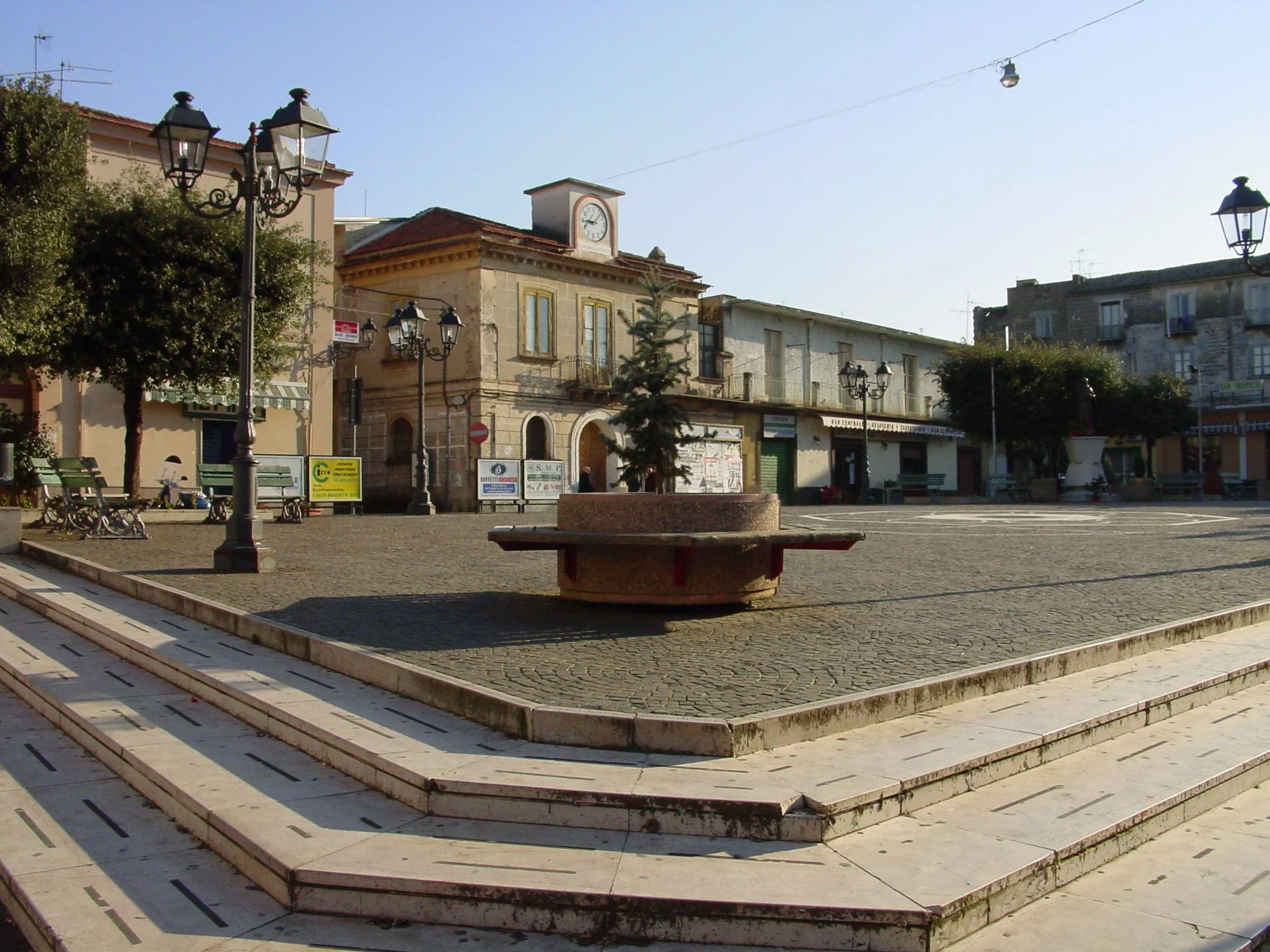
I am working on a family history of the Catallo family in Rochester, NY. I am using public records, family documents, and more to build this.
I am using Claude AI to piece together all of the documents and connections between people. All of the text below is output from Claude with very minor manual edits from myself.
The Catallo Family: From Pignataro Maggiore to Rochester, NY
Last Updated Oct 20, 2026
This is the story of eight generations of Catallos. It begins in Pignataro Maggiore with Casto Catallo and Chiara Borrelli, whose son Angelo, a barber, was born about 1774. It ends with their great-great-great-great-great-grandson George Bernard Catallo of Rochester, New York, who compiled it. The direct line runs Casto > Angelo > Giovanni > Giorgio > Crescenzo Lorenzo "Lawrence" > George Francis (Giorgio Francesco) > George John > George Bernard; the other branches are followed as far as the records go.
Everything here comes from these kinds of records: the civil registers of births, marriages and deaths of Pignataro Maggiore from 1809, in the Napoleonic, Bourbon and Italian series, read on Antenati (the Italian State Archives' portal) and FamilySearch, with the marriage papers filed with them; FamilySearch's indexes of those registers, and its Family Tree, used only as leads; Ellis Island and New York passenger manifests and the Records of Aliens Held for Special Inquiry; a 1918 naturalization certificate and a 1927 US passport; New York State birth, marriage and death indexes; Social Security applications and the Social Security Death Index; a US Consulate report of the death of an American citizen abroad (1949); World War I and II service records, including Army enlistment records, a separation record and honorable discharge, and veterans' headstone and grave-marker applications; US censuses and Rochester city directories; Monroe County business filings; newspapers, chiefly the Democrat and Chronicle, the Times-Union, the Rochester Journal and the Greater Greece Press, including obituaries, death and wedding notices, news stories and advertisements; funeral-home obituaries, a memorial card and a school yearbook; Find a Grave; Jim Catallo's hand-written memoir; and family knowledge from George Bernard Catallo. The source for each claim is named in the text, and where records disagree the disagreement is noted rather than smoothed over. Living people appear only as their relatives' obituaries name them.
Each generation closes with a short section, "The world around them", on the history they lived through: first Pignataro, Terra di Lavoro and the Kingdom of Naples, or Rochester, and then the wider world. Those sections draw on general history, not family records. Where they connect an event to a family member, the connection is an inference unless a record is cited.
Generation 1: Casto Catallo and Chiara Borrelli
The family begins in Pignataro Maggiore, a farming town about 40 km north of Naples and 20 km northwest of Caserta. The earliest Catallos found so far are Casto Catallo and Chiara Borrelli, whose son Angelo, a barber, married Rosa Scialdone. Angelo and Rosa's son Giovanni was born there on 31 Jul 1809. Casto and Chiara are the first generation of this history.
What is known of them. Casto and Chiara's names come from their son Angelo's death act of 1852, which calls them both deceased (Pignataro, Morti 1852, act no. 3; see Generation 2). Nothing else about them has been found. Angelo was born about 1774, so Casto and Chiara were probably born in the 1740s or 1750s and married by the early 1770s (inferred). Pignataro's civil registers begin in 1809, too late for their births or marriage, so only the parish books of San Giorgio Martire are likely to reach them (see Research leads). The FamilySearch Family Tree, without sources, also has a Rosa Catallo (1769 to 1834) who may be another of their children. Casto's name passed down the line: to a grandson who died in 1829, a great-grandson born about 1859 and a great-great-grandson born in 1897.
The world around them
Casto and Chiara were probably born in the 1740s or 1750s, in the Kingdom of Naples, under its first Bourbon king, Charles, who had taken the throne in 1734. Pignataro lay in Terra di Lavoro, the rich farming plain north of Naples, and most of its people worked land held by a feudal lord and the Church. In 1752 work began on the king's vast new palace, the Reggia, at Caserta, about 20 km from Pignataro. For decades it drew masons, carters and laborers from the towns around it. The famine of 1764, one of the worst in the kingdom's history, struck when Casto and Chiara were young. The land itself was the family's wealth: the volcanic soils north of Naples and Caserta grew grain, hemp, olives and vines, including old local grapes such as Pallagrello, and nearly every family in Pignataro lived by working it.
If they lived into old age, they saw the kingdom shaken from outside. The French Revolution began in 1789. In 1799 a short-lived republic was declared in Naples and put down within months by the peasant army of Cardinal Ruffo. French armies returned in 1806 and made Napoleon's brother Joseph, and then Joachim Murat, king. The French abolished feudalism in 1806 and brought in civil registration of births, marriages and deaths in 1809. That reform is why the family's paper trail begins with their grandson Giovanni's birth act of 1809, and why nothing earlier survives outside the parish books.
Generation 2: Angelo Catallo and Rosa Scialdone
The Antenati acts. In October 2026 George Bernard searched the Pignataro registers on Antenati, the Italian State Archives portal, and found three acts for Giovanni's parents and brother. Each was read from its image; question marks below mark words that were hard to read.
Giovanni's birth, 1809. Giovanni Tomaso Catallo was born on 31 Jul 1809 and registered the next day. His father, Angelo Catallo, a barber (barbiere) aged about 35 and living in what looks like Strada Alvino, reported the birth; he could not sign. The mother was Rosa Scialdone, "his legitimate wife", whose age is not given. The witnesses were two students, Bartolomeo Bovenzi(?) and Francesco Borrelli, both in their twenties, and the mayor was Angelo Rotolo (Pignataro, Nati 1809, act no. 48, image 28 of 56, left page; Antenati). The parents' names and the date both fit Giovanni's 1875 death act, so this is almost certainly him.
Casto, Giovanni's brother, died 1829. Casto Catallo, a laborer (bracciale?) aged about 27 (so born about 1802), died at home on 15 Jan 1829. He was a son of Angelo Catallo, barber, "who lived with this son", and Rosa Scialdone. His cousin Antonio Giuliano, about 27, was one of the two declarants (Pignataro, Morti 1829, act no. 1, image 2 of 44, right page, image ID 0JapKl5; indexed as "Catalo Casto"). Giovanni's brother Casto is the likely namesake of Giorgio's brother Casto (inferred).
Rosa Scialdone's death, 1834. Rosa Scialdone, a spinner (filatrice), died at home on 6 May 1834, aged 60, so she was born about 1774. She is called the wife, not the widow, of Angelo Catallo, so Angelo was still alive in May 1834. Her parents, both dead by then, were Michelangelo Scialdone and Teresa Funese(?); the surname is hard to read. Her brother Antonio Scialdone, about 58, a laborer, reported the death (Pignataro, Morti 1834, act no. 23 (the index reads 23 or 13), image 16 of 29, right page, image ID LzlYrQ0).
Angelo's death, 1852. Angelo Catallo, a barber, born and living in Pignataro, died in his house on 17 Jan 1852 and was registered the same day. He was the widower of Rosa Scialdone. His age reads "settantasette" (77), which fits his being about 35 in 1809; it may instead read "ottantasette" (87). His parents, both dead by then, were Casto Catallo and Chiara Borrelli. The declarants were Gaetano Izzo, a tailor, about 30, and Vincenzo Giuliano, a barber, 29 (Pignataro, Morti 1852, act no. 3, image 10 of 48, right page; listed in the year's index, image 3; Antenati). Angelo was a barber, Rosa's widower, and his parents' names match the Family Tree, so this is almost certainly him. It takes the line back one more generation, to Casto and Chiara, who were probably born in the 1740s or 1750s (inferred from Angelo's age). Casto was also the name of Angelo's son who died in 1829 and of his grandson born about 1859.
The Giuliano cousin of 1829 and the Bovenzi and Borrelli witnesses of 1809 belong to families that turn up around the Catallos for the next hundred years. Angelo and Rosa's children found so far are Casto (about 1802 to 1829), Giovanni Tomaso (1809 to 1875, Generation 3) and Maddalena, who died on 17 Aug 1880, aged about 61 (death act no. 58 of 1880). Her birth year of about 1819 comes only from that age and is unconfirmed: George's search of the 1816–1821 birth registers did not find her, so she may have been born earlier. Giovanni's marriage to Maria Giovanna Scialdone has not been found. Their eldest known child, Rosa, was born about 1852, so they probably married in or before 1851, and Pignataro's 1851 registers are not on Antenati (see Research leads).
Family Tree leads, not yet sourced except where noted. The FamilySearch Family Tree, which has no sources attached for these people, gives Angelo Catallo (G1XB-Y61) as born 1781, a barber, the son of Casto Catallo and Chiara Borrelli. His 1852 death act now confirms the parents, but not the year: his ages in 1809 and 1852 point to about 1774 or 1775, not 1781. The tree also has Rosa Scialdone (G8VX-8HY, 1774 to 6 May 1834, daughter of Michel'Angelo Scialdone and Teresa Funese), Casto (G1B8-PL6, 1802 to 15 Jan 1829), and a Rosa Catallo (9HMP-2HK, 1769 to 1834), possibly Angelo's sister.
The world around them
Angelo and Rosa, both born about 1774, lived through the most turbulent decades the kingdom had known. They were in their twenties during the republic of 1799 and in their thirties under the French, when feudal dues were abolished and the new civil registers were opened. Giovanni's birth act of 1809 is written in the "Napoleonic" register series. After Napoleon's fall in 1815 the Bourbons returned, and in 1816 Naples and Sicily were joined as the Kingdom of the Two Sicilies. Uprisings followed in 1820–21 and again in 1848, and each was put down.
In a country town, a barber often did more than cut hair and shave: barbers commonly let blood and pulled teeth as well, which may be why Angelo's trade is named in every act (inferred). The barber's shop was also where the town's men met and its news passed, so a barber knew everyone's business. Rosa was a spinner, and the women of Terra di Lavoro spun the hemp, flax and wool that the district grew; hemp especially was one of its main crops. Spinning at home brought in a little money or cloth to stretch a farm family's thin wages. Cholera reached the kingdom in 1836–37 and killed thousands in Naples and the towns around it. In 1839 the first railway in Italy opened, from Naples to Portici. Angelo died in January 1852, eight years before the kingdom itself came to an end.
Generation 3: Giovanni Tomaso Catallo and Maria Giovanna Scialdone
Giovanni, Maria Giovanna and their children. In October 2026 George Bernard Catallo searched the FamilySearch index of the Pignataro registers and found 40 Catallo acts, which fill in this generation. Each act is listed with its permanent FamilySearch link in research/pignataro-civil-acts-2026-10-19.md. The details below are as indexed, except where an act has been read from its image. Giorgio's father, Giovanni Catallo, was the son of Angelo Catallo and Rosa Scialdone. He died on 28 Nov 1875, aged about 66 (death act no. 98 of 1875), which fits his birth act of 1809, described above. Giovanni's sister Maddalena died on 17 Aug 1880, aged about 61 (death act no. 58 of 1880). Giorgio's mother, Maria Giovanna Scialdone, was still living in 1890. The children of Giovanni and Maria Giovanna found so far are:
Giorgio, born February 1857 (Generation 4, below).
Casto, born about 1859. He married Maria Stella Cicala in 1890 and died in 1897 (below).
Giovanni, who died on 22 Dec 1868, aged 4 (death act no. 140 of 1868).
Crescenzo, born 12 May 1868 (birth act no. 46 of 1868). He was Giorgio's younger brother, and Giorgio's son Crescenzo was born 22 years later. Whether this elder Crescenzo grew up is not yet known. He is very likely the other Crescenzo ("Crisengo") Catallo of Rochester, who died on 1 Jun 1945, since that man's Find a Grave entry gives his birth year as 1868 (inferred; see Two Crescenzo Catallos in Rochester).
Rosa, who married Vincenzo Leonardo on 10 Nov 1875 (marriage act no. 15 of 1875).
Angelo, who married Teresa Borrelli on 13 Mar 1881 (marriage act no. 5 of 1881).
Carolina, who married Antonio Cicala on 29 Sep 1887 (marriage act no. 26 of 1887).
The family pedigree chart lists an Angelo, son of Giorgio, married to a Theresa Borrelli. The registers show that this Angelo was Giorgio's brother instead. Angelo and Teresa lost several children young:
Pietro, born 26 Jul 1884, died 12 Aug 1885.
A Giovanni, died 3 Jul 1886, aged about 4.
Another Giovanni, born 25 Aug 1886, died three days later at 5 am on 28 Aug (death act no. 85 of 1886; FamilySearch, image group 007063129, image 1402).
A third Giovanni was born on 20 Dec 1887. Their daughter Maria Maddalena, born 24 Jan 1891, died on 3 Oct 1918, aged 27. Their son Pietro, born 1 May 1896, married Margarita Feola on 5 Apr 1923. Giorgio's "in-law" Giovanni Borrelli of 1900 was more likely his wife's sister's husband (see Elisabetta's family, under Generation 4), though Angelo's marriage gave the Catallos a second Borrelli link. Carolina's marriage to Antonio Cicala and Casto's to Maria Stella Cicala tied the Catallos to the Cicalas twice over. That explains why Cicala cousins went to Carlo Catallo in Rochester in 1920. Carlo himself is not among Giovanni's children found so far, so he was more likely a cousin than a brother (inferred).
Another Catallo household: Casto Catallo. The Pignataro Maggiore birth register for 1891 records a second Catallo family in the town in Crescenzo's infancy (Atti di Nascita 1891, act no. 35, FamilySearch, image group 007063129, image 2069). On 1 Mar 1891 Casto Catallo, aged 30, a bracciale (day laborer), registered the birth of his son Giovanni. The boy had been born at 10 am on 26 Feb 1891 ("the twenty-sixth of last month"), at house number 12 on a street whose name is hard to read (perhaps Via Marrazzi). His mother was Maria Stella Cicala. The mayor, Alfonso del Vecchio, took the declaration.
Casto was Giorgio's brother. Casto's marriage act names his parents. On 25 Mar 1890, in the Pignataro town hall before the mayor, Alfonso Del Vecchio, Casto Catallo, 30, single, a farm laborer born and living in Pignataro, married Maria Stella Cicala, 25, a farm laborer of Pignataro. Casto was the son of the late Giovanni and of Maria Giuseppa Scialdone, who was living. Maria Stella was the daughter of the late Lorenzo Cicala and of Anna Maria D'Urzo (probable reading). The banns were read on 9 and 16 Mar 1890. Neither bride nor groom could sign. The witnesses were the same two men who had stood at Giorgio's wedding four years earlier: Giovanni Lapiso, the clerk, and Gennaro Scialdone, the town servant (marriage act no. 9 of 1890; FamilySearch, image group 007063129, image 1957; image read). Giorgio's 1886 marriage act names their mother as Maria Giovanna Scialdone, and so do Giovanni's 1875 death act and the 1868 acts for the younger children. Only Casto's marriage says Giuseppa, so that is most likely a clerk's slip.
Casto died on 22 Apr 1897, aged about 38 (death act no. 71 of 1897, indexed "Coste"), less than three months before his last child was born. He and Maria Stella had four children:
Giovanni, born at 10 am on 26 Feb 1891, who died on 7 Mar 1891 (death act no. 40 of 1891).
Giovannina, born 16 Mar 1892, who died on 26 Sep 1916, aged 24 (death act no. 64 of 1916).
Giovanni Luigi, born 20 Jun 1895, who died in infancy on 18 Jan 1897.
Casto, born 12 Jul 1897 (birth act no. 81 of 1897), after his father's death and named for him.
Casto the younger married Maria Antonia Cicala in Pignataro on 27 Mar 1924 (marriage act no. 10 of 1924). He is almost certainly the "Costi" Catallo of 228 Dewey Avenue, Rochester, whose wife Antonette was a daughter of Lorenzo Cicala. He is also almost certainly the "Castiglio" Catallo born on 11 Jul 1897 who served in 1918 and is buried at Holy Sepulchre, since a one-day difference in a birth date is common between Italian registers and later American papers. Both identifications are inferred but strong, and they make Costi Crescenzo's first cousin. Casto does not appear on the family's pedigree chart.
The world around them
Giovanni was born in 1809 under King Joachim Murat and died in 1875 a subject of the King of Italy. In between, the world of Pignataro changed more than in the centuries before. In 1860 Garibaldi's Expedition of the Thousand took Sicily and then Naples. The decisive battle, on the Volturno River on 1–2 Oct 1860, was fought around Capua and Caserta, a few miles from Pignataro. Capua surrendered on 2 Nov 1860, Gaeta, the last Bourbon stronghold, in February 1861, and the Kingdom of Italy was proclaimed on 17 Mar 1861. Giovanni's children Giorgio, Casto and Carolina were small children when it happened.
Unification brought new taxes, military conscription and a new currency, the lira. The south had little industry, and its land was either split into tiny plots or held in large estates, so day laborers like the Catallos had no cushion against a bad harvest. The new national taxes fell hard on the rural south; the grist tax of 1869, charged on grain taken to the mill, was the most hated. In the years that followed, the southern countryside was torn by brigandage, a guerrilla war of former Bourbon soldiers, deserters and desperate peasants against the new state. Terra di Lavoro, with its hills along the old border with the Papal States, was one of its centers, and the army fought it there for most of the 1860s. In the same years the town became Pignataro Maggiore, to tell it apart from other Pignataros in the new kingdom. The Italian civil registers that hold most of this family's acts begin in this period, and Rome became the capital in 1871.
Generation 4: Giorgio Catallo and Elisabetta Caricchio
Giorgio, Giovanni and Maria Giovanna's eldest known son, married Elisabetta (Elizabeth) Caricchio in Pignataro. Both are named as Crescenzo's parents on his 1927 Italian marriage certificate and his 1979 New York death certificate.
Giorgio's birth and parents. Giorgio was born in Pignataro Maggiore in February 1857. On 22 Feb 1857 his father, Giovanni Catallo, 50, a bracciale (day laborer), presented a newborn boy to the mayor, Giuseppe Martone, and the parish of San Giorgio reported that the child was baptized Giorgio the same day. His mother was Maria Giovanna Scialdone, 29, also a day laborer (Pignataro Maggiore birth act no. 16 of 1857, extract filed with the 1886 marriage papers; FamilySearch, image group 007063129, image 1352). The FamilySearch index gives his birth date as 21 Feb 1857, the day before the registration, which is likely, since births were usually registered within a day or two; the extract shows only the registration day. This settles the question the family's papers left open: the pedigree chart's "about 1862" was too late, and the ages he gave at Ellis Island (37 in 1896, 42 in 1900, 47 in 1905, 63 in 1920) were close to right. Through his mother he was a Scialdone, which may explain why Scialdones keep turning up beside the Catallos as witnesses and fellow travelers (inferred).
Marriage, 1886. Giorgio married Maria Elisabetta Caricchio in the town hall of Pignataro on 7 Feb 1886, before the mayor, Luigi Vito (marriage act no. 2 of 1886; FamilySearch, image group 007063129, image 1374). He was 28, single, a contadino (farm laborer), born and living in Pignataro, son of the late Giovanni and of Maria Giovanna Scialdone, who was still living there. Giovanni had died in 1875 (Generation 3). Elisabetta was 21, a farm laborer born and living in Pignataro, daughter of Mariano Caricchio and Maria Martone, both living. She was born on 8 May 1864 (birth act no. 7 of 1864, a copy filed with the marriage papers; FamilySearch index). The banns were read on 17 and 24 Jan 1886. Neither bride nor groom could sign. The witnesses were Giovanni Lapiso(?), 41, a clerk, and Gennaro Scialdone, 45, the town servant. Their son Mariano, born in 1892, carried his maternal grandfather's name, in the usual Italian way.
Elisabetta's family, the Caricchios. George Bernard Catallo's October 2026 search of the FamilySearch index also found twelve Caricchio acts, listed with their links in research/pignataro-civil-acts-2026-10-19.md. Elisabetta's father, Mariano Caricchio, was the son of Raffaele Caricchio and Brigida Ronzo. He died on 2 Jul 1891, aged 61 (death act no. 6 of 1891). Elisabetta's brothers and sisters included:
Giuseppe, born 8 May 1869 (birth act no. 3 of 1869), who married Concetta Bovenzi.
Raffaele, who married Isabella Scialdone on 8 Apr 1894, aged 27 (marriage act no. 10 of 1894). The 1904 death register page that records little Giorgio Catallo also records, in the next act, the death of a Margherita Caricchio, about 3, daughter of Raffaele and Isabella Scialdone, on 27 Dec 1904. She was probably Elisabetta's niece (reading of the image, not yet checked closely).
Maria Teresa, who married Giovanni Borrelli on 20 Oct 1896, aged 24 (marriage act no. 1 of 1896).
Maria Teresa's marriage made Giovanni Borrelli Giorgio's brother-in-law. That is almost certainly why Giorgio named "his in-law Giovanni Borrelli" of Philadelphia when he sailed in 1900. Giovanni Borrelli, 37, who witnessed Giovannina's wedding in 1909, was born about 1872, and he was most likely the same man, her uncle by marriage (inferred).
Antoinette was Crescenzo's first cousin. Giuseppe Caricchio and Concetta Bovenzi were the parents of Maria Antonia "Antoinette" Caricchio, whom Crescenzo married in 1927. Their children found in the index are:
Maria, born 12 Mar 1898.
Mariano, born 9 Jun 1900.
Antonio, born 31 Jul 1903.
Giorgio, born 16 Mar 1906, who died on 29 Apr 1907.
Vito, born 9 Jul 1910, who died on 4 Aug 1910.
No birth act for Antoinette herself is indexed. Her Social Security record gives 8 Oct 1907, and the 1907 births volume will need to be read by hand. Because Antoinette's father was Elisabetta's brother, Crescenzo's second wife was his first cousin, a daughter of his mother's brother. The family knowledge that both came from Pignataro and from the same Caricchio name now has an explanation (the parents' names come from the index and from Antoinette's own Social Security and FamilySearch records, which name Joseph Carichio and Concetta Bovenzi).
The crossings, 1896 and 1900. Ship manifests now trace Giorgio across the Atlantic at least four times. On 11 May 1896 the Alsatia landed him at New York from Naples: line 742, Giorgio Catallo, 37, laborer, bound for Rochester for a "protracted sojourn" with one piece of baggage (Alsatia manifest, p. 13). He was one of about sixteen men on lines 727–743 all going to Rochester, with Pignataro surnames that recur in the family's records: Cicali (Cicala), Palumbo, Giordano and Scialdone. One of them, Carlo Catollo, also 37, may be a relative. Pignataro men were already working in Rochester in the 1890s, and Giorgio was among them. The match is strong.
Carlo Catallo, probably Giorgio's brother or cousin. A Carlo Catallo was living in Rochester in 1920. The S.S. Madonna, which sailed from Naples on 8 Oct 1920 and reached New York later that month, carried on list 17, lines 2–3, Lorenzo Cicala, 42, a shoemaker, and Giacomo Cicala, 37, both of Pignataro, going to "their cousin Carlo Catallo" at 376 State Street, Rochester. Line 1, Pietro Giuliani, 17, was going to his cousin Antonio Del Vecchio at the same address. Carlo is most likely the Carlo Catollo, 37, who sailed with Giorgio to Rochester in 1896, which would put his birth around 1859 and make him Giorgio's brother or first cousin. That identification is inferred, not proven. The Cicala cousins also show the Catallos and Cicalas were intermarried, as Casto Catallo's 1890 marriage to Maria Stella Cicala, daughter of a Lorenzo Cicala, already shows. The 1920 census for 376 State Street would show who Carlo lived with.
On 13 Mar 1900 he arrived again, on the Victoria from Naples: Giorgio Catallo, 42, married, a laborer from Pignataro, with $18. He traveled steerage, could not read or write, and declared he was staying in the USA (Ellis Island passenger record). He sailed with eight other Pignataro men and named as his in-law Giovanni Borulli (probably Borrelli) of 915 "Lacque" Street, Philadelphia. He was almost certainly the Giovanni Borrelli who had married Elisabetta's sister, Maria Teresa Caricchio, in 1896 (see Elisabetta's family; inferred from the names and dates). On this and every later crossing he told the clerks he had never been in the United States before, an answer repeat laborers often gave, which does not weaken the matches. A G. Catallo, 36, a farmer, also landed from the Hesperia on 5 May 1893, with no town given; that one is unconfirmed.
Turned back at Ellis Island, 1905. On his third known crossing Giorgio was refused entry. The Germania sailed from Naples on 18 May 1905 and arrived on 1 Jun 1905. Its manifest (list 6, line 11) shows Catallo, Giorgio, 47, married, laborer, unable to read or write, from "Pignataro Magg.", bound for Rochester with $12, going to a relative, probably Giuseppe Borrelli (the surname is hard to read), at a hotel restaurant in Rochester. The line is stamped DEPORTED. The Record of Aliens Held for Special Inquiry for the same ship (line 16) shows him held as "LPC" (likely to become a public charge) by inspector Mann, excluded by a Board of Special Inquiry on 2 Jun (record page 86), and sent back on the Germania on 5 Jun 1905. LPC was the usual ground for refusing an older laborer with little money. On the same manifest page, Lorenzo Carucci of Pignataro was going to his friend Bartolomeo Giuliano at 368 State Street, Rochester, the uncle Angela would join twelve years later.
Giorgio's ages, 37 in 1896, 42 in 1900, 47 in 1905 and 63 in 1920, all fit his birth in February 1857. Read together, the records show a laborer who crossed back and forth for work in Rochester while his family stayed in Pignataro. Two years after he was turned away, his 15-year-old son Crescenzo sailed into New York on the same ship, the Germania, and was admitted.
The last crossing, 1920. Giorgio was at home in Pignataro in February 1917, when his daughter Angela named him as her nearest relative there (S.S. Patria manifest, below). In 1920, at 63, he crossed one last time. The S.S. Taormina list from Naples (list 20, line 3) records Catallo, Giorgio, 63, married, laborer, of Pignataro, 5 ft 2 in, brown hair and eyes, with $50, arriving at New York on 4 Jun 1920. His nearest relative at home was his wife Elisabetta, so she was still living in Pignataro in 1920. He was going to his son Crescenzo at "376 St", almost certainly 376 State Street, Rochester.
He did not get through at once. The Special Inquiry record for the Taormina (sheet 239) holds him as "Un read LPC PH D": unable to read, likely to become a public charge, and probably certified physically defective (the last reading is inferred from the usual abbreviations). After about five days he was admitted on 10 Jun 1920. The 1917 Immigration Act exempted from its literacy test a father over 55 coming to join an admissible son, and that may be why he was let in; this is an inference. This is the visit the family remembered, when the old man tied young George to the cellar pole. The Rochester city directory for the year ending October 1922 (p. 268) lists "Catallo Giorgio laborer bds 13 Saratoga av", boarding in his son's house. Where and when Giorgio and Elisabetta died is not yet known.
The same index lists a Crescenzo "Castallo", 25, of Pignataro, who sailed to New York before about 1897. He cannot be our Crescenzo, who was a child then. If the surname is a misreading of Catallo, he may be an older relative after whom Crescenzo was named.
The 1920 crossing is the one the family remembered. Notes made on the 2002 Ellis Island printouts mark it as Jim Catallo's grandfather, and Jim's memoir recalls "grandpa" visiting from Italy and tying a misbehaving young George to a pole in the cellar. It is the only story of Giorgio that survives in the family's own words.
The town's province changed names around the family, which explains the mixed place names in the records. Pignataro belonged to Terra di Lavoro, seated at Caserta, until 1927, when it was placed under Naples; the province of Caserta was re-created in 1945. So the 1939 marriage copy and the 1949 consular report say "Napoli", while later papers say "Caserta".
Jim's memoir says his father had two sisters, one on White Street in Rochester and one in Italy. The "100" and "200" beside them may be Jim numbering the two sisters rather than house numbers. The registers bear him out: the sister in Italy was Giovannina and the sister in Rochester was Angela (both below). The Ellis Island printout marks a 16-year-old from Pignataro who arrived in 1914 as "nephew to Dad", but his name is cut off the copy. Casto's son, also named Casto and born in 1897, fits (see Casto, under Generation 3).
Giorgio and Elisabetta's children. The registers now give seven children. All of them were born in Partignano, a hamlet of Pignataro. Details are from the FamilySearch index except where an act was read from its image.
Giovannina, born 12 Dec 1886 (birth act no. 10 of 1886). She was the eldest, named for her grandfather Giovanni, and married Nicola Zeppetella in 1909 (below).
Angelina, born at 3 pm on 4 Oct 1888 at Via Piazza no. 12. Her father, "Giorgio Catallo, 32, bracciante", registered her on 7 Oct (birth act no. 12 of 1888; FamilySearch, image group 007063129, image 1654; image read). She died on 14 Dec 1890, aged 2 (death act no. 14 of 1890, indexed "Angela").
Crescenzo, born 22 Sep 1890 (birth act no. 9 of 1890), the subject of the next section.
Mariano, born 12 Nov 1892 (birth act no. 8 of 1892) and named for his mother's father. He died on 14 May 1895, aged 2 (death act no. 6 of 1895). He is the "Mariano" of the family pedigree chart.
Angela, born 21 Nov 1894 (birth act no. 14 of 1894) and given the name of the sister who had died. She went to Rochester in 1917 (below).
Maria Giovanna, born 31 Dec 1896 and registered in 1897 (birth act no. 1 of 1897), named for her grandmother. Nothing more is known of her yet.
Giorgio, born 5 Nov 1900 (birth act no. 16 of 1900) and named for his father. He died at 6:30 am on 12 Dec 1904 at Via Piazza no. 13, aged four years and one month (death act no. 9 of 1904; FamilySearch, image group 007063130, image 1426; image read). His death came about six months before his father's failed crossing of 1905.
Three of the seven died in early childhood. The house numbers, 12 in 1888 and 13 in 1904, show the family lived on Via Piazza in Partignano for at least sixteen years.
Angela Catallo, the sister in Rochester. The S.S. Patria, which sailed from Naples and reached New York in February 1917, carried on list 10, line 28, Angela Catallo, 22, single, traveling second cabin and paying her own passage. Her nearest relative at home was "her father Giorgio Catallo" of Pignataro. She was going to "her uncle Bartolomeo Giuliano" at 376 State Street, Rochester, the same house where Crescenzo was living when he was naturalized in 1918. Her age fits exactly: she was born on 21 Nov 1894 (birth act no. 14 of 1894), so she was 22. Since the sister in Italy was Giovannina (below), Angela is the sister in Rochester whom Jim remembered. Bartolomeo Giuliano was an uncle by blood or by marriage, so Giuliano is a new family surname. An Angelo Giuliano, 21, of Pignataro, had sailed with Giorgio in 1900. Angela traveled with Angela Mancini, 55, a widow going to her sons Antonio and Pietro Borrelli at 384 State Street, another sign of the Borrelli connection.
The sister in Italy: Giovannina Zeppetella. Crescenzo's other sister stayed in Italy, and the registers now name her. On 15 Apr 1909, in the town hall of Pignataro, Giovannina Catallo, 22, single, a farm laborer born and living in Pignataro, daughter of Giorgio Catallo and Elisabetta Caricchio, both living there, married Nicola Zeppetella, 33, single, a possidente (landowner), born and living in Rocchetta e Croce, son of the late Diego Zeppetella and of Concetta De Biasio (probable reading) of Rocchetta e Croce. The banns were read in both towns on 28 Mar and 4 Apr 1909. Nicola signed; Giovannina could not. The witnesses were Giovanni Borrelli, 37, and Gaetano D'Ambrosio, 39, both farm laborers (marriage act no. 8 of 1909; FamilySearch, image group 007063130, image 2181). Born on 12 Dec 1886, ten months after her parents' wedding, Giovannina was their first child, named in the Italian way after Giorgio's late father, Giovanni. This confirms the married name the 1943 clipping pointed to. Her eldest son, Angelo Zeppetella, born about 1910, was a prisoner of war in 1943. Her youngest, Americo, was killed in East Africa about 1941. The other two served in the Italian forces (see the 1943 section under Crescenzo). Rocchetta e Croce is a small hill town a few kilometers north of Pignataro. Nicola had already worked in America before the wedding. The Italians to America index has a Nicola Zeppetella of Rocchetta, 24, single, going to New York about 1898 (manifest ID 83188), and again at 30 going to an in-law in New Haven, Connecticut, about 1904 (880549). The 1904 entry calls him married, but the 1909 act calls him single, so the 1904 clerk was probably wrong (inferred). About 1910–11 his nephew Elia Zeppetella, 18, of Rocchetta, sailed to "his uncle Nicola Zeppetella" at 14 Green Street, New Haven (808055). So Nicola went back to New Haven soon after his marriage, while Giovannina seems to have stayed in Italy, where her sons grew up (inferred). A Giovanni Borrelli, 32, of Pignataro also went to Rochester about 1905, to Vito Alfonso, Giorgio's shipmate of 1900. By age he may be the Giovanni Borrelli, 37, who witnessed the 1909 wedding (inferred; index years are estimated from the manifests; research/passenger-list-catallo.md).
The world around them
Giorgio was born in 1857 in the Kingdom of the Two Sicilies and was a small boy when it became part of Italy. He and Elisabetta grew up in a south that unification had left poor: taxes were heavy, land was scarce, and in the 1880s cheap American grain drove down the prices that farm families depended on. At the end of the century phylloxera, the root louse that had already ruined the vineyards of France, spread through southern Italy's vines. Cholera struck Naples again in 1884. From the 1880s, in what Italians call the Great Emigration (la grande emigrazione), men from the towns of Campania began to cross the Atlantic for seasonal and wage work, and by the 1900s whole villages had a branch in an American city. Emigration ran in chains: the first man to go found work and lodging, then sent home money, letters and prepaid tickets that brought brothers, sons, cousins and neighbors after him. The Catallos followed that pattern, from Giorgio in 1896 to Crescenzo in 1907, Angela in 1917 and the Cicala cousins who went to Carlo in 1920. Rochester, with its clothing factories, nurseries, railroads and building trades, drew so many from Pignataro that 376 State Street became a family address.
Giorgio's crossings track American immigration law. Ellis Island opened on 1 Jan 1892. After it burned in June 1897, new arrivals were inspected at the Barge Office in Manhattan until December 1900, so his March 1900 arrival was probably processed there (inferred). The "likely to become a public charge" rule that sent him back in 1905 was the most common reason for turning immigrants away. Italy entered the First World War in May 1915. In 1917 Congress added a literacy test, which Giorgio, who could not read, would have failed; the law exempted an older parent joining a son already in the country, which may be how he was admitted in 1920 (inferred). The quota laws of 1921 and 1924 then cut Italian immigration to a fraction of what it had been.
Generation 5: Crescenzo Lorenzo "Lawrence" Catallo (1890–1979)
Crescenzo Lorenzo "Lawrence" Catallo was born in Pignataro Maggiore on 22 Sep 1890 (Pignataro birth act no. 9 of 1890, FamilySearch index; passport; death certificate) and left home at 15. Rochester knew him as Lawrence; the records also call him Criscenzo and Lorenzo, and the 1949 consular report spells the surname Catello. He signed his own name "Crisenzo" (per George Bernard Catallo).
Crossing to America
On 26 Apr 1907 he reached New York on the Fabre Line steamer Germania, which had sailed from Naples on 11 April (Ellis Island manifest; ShipIndex). He is line 2 of the manifest: male, 15, single, from Pignataro. Just above him is Giovanni Marcello, 32, also of Pignataro, probably a traveling companion or sponsor.
Three years later he crossed again. The Madonna sailed from Naples in August 1910 and reached New York on 30 Aug 1910 (the 2002 printout gives 29 Aug). Crescenzo is on list 1, line 26: "Catallo Crescenzo", 20, single, a farm laborer who could read and write, from Pignataro. His nearest relatives at home were his "Parents Catallo Giorgio and Elisabetta, Pignataro Maggiore", so this is the first of his own crossings to name both parents. He was going to his "Cousin Lorenzo Testa, State St 376, Rochester" with $30. He was 5 ft 3 in, with a brown complexion, black hair, dark eyes and a scar on his chin. Column 17 says he had been in the United States before, in Rochester; the years are only partly legible but appear to run from 1907, which fits the 1907 Germania arrival (inferred). The "Non Immigrant Alien" stamp beside his name most likely marks him as a returning resident, though that is also inferred (Madonna manifest, list 1, line 26). So 1910 was a return to Rochester after a visit home, not a first arrival. Jim's memoir dates his father's coming to 1910, which was most likely the crossing the family remembered. The manifest also shows that 376 State Street was already a family address that year. Testa is a new surname among the family's kin. He made at least five Atlantic crossings in his life.
Citizen, husband and father
On 6 Nov 1915 "Criscenso L. Catallo" married in Rochester (NYS marriage index, p. 212, line 8, certificate 29117). The index does not name the bride. The middle initial marks the groom as Crescenzo Lorenzo, and his bride was almost certainly Martha (Marta) Munno, also of Pignataro, who had lost her mother young and been raised by an aunt (Jim's memoir). Her name here is an inference until certificate 29117, which would also name her parents, is seen. Their first son, George, was born on 14 May 1916. On 30 Dec 1918 the Monroe County Supreme Court naturalized him as "Crescenzo Lawrence Catallo" (certificate no. 870483). The certificate describes a man of 28, 5 ft 2¾ in, with dark brown eyes, black hair and a scar on his left little finger, living at 376 State Street with Martha, 26, and sons Giorgio, 2, and Simone, 1.
By 1920 the family had moved to 13 Saratoga Avenue, where Jim was born at home; Lawrence was still writing from there in 1949. The family's parish was likely St. Anthony of Padua, Rochester's first Italian national parish (parish history).
The Rochester city directory for the year ending October 1922 (p. 268) files him under the misspelling Cataldo: "Lorenzo (Martha) mach opr h 13 Saratoga av", a machine operator heading the household, with his father Giorgio boarding there. A different Crescenzo, with a wife Vincenza, lived at 358 Oak Street and is listed under both Catallo and Cataldo. He is not our Crescenzo, though he may be a relative. A Rochester marriage index shows a "Crisengo Catallo" marrying Vincenza Spampinato on 11 Jul 1931 (certificate 29598), when our Crescenzo had been married to Antoinette for almost four years.
His earlier address, 376 State Street, was a Pignataro household that the family's emigrants used for years. Crescenzo lived there in 1918; his sister Angela went there to her uncle Bartolomeo Giuliano in 1917; his father Giorgio gave it as Crescenzo's address in June 1920; and in October 1920 two Cicala cousins from Pignataro were going there to Carlo Catallo (S.S. Madonna, list 17). Whether Crescenzo still lived there in 1920, after Jim's birth at Saratoga Avenue, is not clear.
Loss and a second marriage
Martha, born on 22 Jul 1892, died on 26 Nov 1926, aged 34, eight months after the birth of their fifth child, Betty (NYS death index 1926, FamilySearch QGXY-7L32; Find a Grave, Holy Sepulchre; Jim names Lake Avenue Hospital). The four older children went to St. Mary's orphanage at Main and Genesee Streets; baby Betty lived with a family friend.
His passport, no. 435233, dates what came next almost day by day. It was issued on 8 Jul 1927 and lists him as a leather cutter. He landed at Naples on 29 Jul, and on 8 Oct 1927 he married Maria Antonia "Antoinette" Caricchio in Pignataro Maggiore (civil register 1927, part I, no. 22). Her parents were Giuseppe Caricchio and Concetta Bovenzi, a reading her FamilySearch record confirms. He left Naples on 15 Oct and brought her home to five children aged about 10, 8, 6, 4 and 1½.
Jim remembered that his father "married a cousin of his". The records support a family tie, since Crescenzo's mother and his new wife were both Caricchios.
A FamilySearch record for Maria Antoinette Catallo gives her birth as 8 Oct 1907 and her immigration as 1927. It places her in Rochester in 1930, 1935 ("same house") and 1940, and records her death in Rochester on 28 Dec 1996 and her burial there. It names her parents as Joseph (Giuseppe) Carichio and Concetta Bovenzi, her husband Lawrence Catallo, and her daughter Antoinette Wrights. The 1907 birth date falls on the day and month of her wedding, and Jim remembered her as 29 when she married, so her true birth year is still open (see the conflicts table).
The Caricchios had their own ties to Rochester. In the Italians to America index, an Alessandro Caricchio, 38, married, of Pignataro sailed for Rochester in about 1905, with a contact at 368 State Street. That was a few doors from the 376 State Street where Crescenzo lived in 1918. He traveled on the same manifest as several Bovenzis, the surname of Antoinette's mother. A Giuseppe Caricchio, 31, married, of Pignataro, sailed in about 1900, bound for what is probably Fishers Island, NY, with a Borrelli contact. Antoinette's father Giuseppe was born in 1869, which fits that age, and his sister had married a Borrelli, so this is very likely him (inferred). These are index entries only, with estimated years.
The deaths of the twins, Lawrence and Joseph
Crescenzo and Antoinette had five children. Two boys died young. Joseph Catallo of 13 Saratoga Avenue died on 27 Nov 1947, and his death notice names his parents as Mr. and Mrs. Lawrence Catallo, his five brothers as George, Simon, James, Chester and Lawrence Jr., and his four sisters as Mrs. Ben Rinaudo, Martha, Connie and Annette Catallo. He was buried at Holy Sepulchre after a funeral at Holy Apostles Church (Democrat and Chronicle, 30 Nov 1947, p. 34). The state death index gives his age as 1 (cert. 66287). He and Lawrence (Lorenzo) were twins, born in Rochester on 24 Jul 1946, and both died young of the same illness (family knowledge, per George Bernard Catallo). In 1949 Antoinette took Lawrence to Pignataro on passport no. 30962, staying at Via Partignano 3. He died there at 2 pm on 24 May 1949, of splenic anemia (American Consulate General, Naples, Report of Death, 16 Aug 1949).
He was laid in a vault in the Pignataro cemetery and not brought home. In 1982 a Vito Giorgio paid the Congrega di S. Giorgio Martire, the town's confraternity of St. George, 18,600 lire to renew his burial niche (receipt no. 46).
Work and last years
Crescenzo was a leather cutter for most of his working life. Jim wrote that he worked for the WPA in the 1930s and then cut leather at Eastman Kodak until he retired at 65; his death certificate confirms Kodak and gives his schooling as grade 5. Jim remembered him as hard-working, well dressed on occasion, and handy: he did his own repairs and taught Jim the carpentry Jim practiced for sixty years.
A family on both sides of the war, 1943
A Rochester newspaper clipping kept by the family, from the summer of 1943, tells how the war divided Crescenzo's family. Its headline reads "Uncle of Trio in Italian Army Has 3 Sons Fighting for U.S.", and a photograph captioned "Their Kin Fights Kin" shows Crescenzo, in glasses, with his son Simon, the two of them reading a V-mail letter from a nephew who was a prisoner of war. The story gives the family's address as 13 Saratoga Avenue. The full page shows where it ran: the Rochester Democrat and Chronicle of Sunday 8 Aug 1943, p. 2B (p. 18 of the issue), so the evening Crescenzo and Simon were photographed with the letter was Saturday 7 August (Democrat and Chronicle, 8 Aug 1943, p. 18, via Newspapers.com; the family's cutting is in family history 1 and 2). "Lawrence Catallo's three fighting sons" were in the US Army: Chester, 21, a private in the Signal Corps on maneuvers near Nashville; George, 27, a corporal in the Infantry at Fort McClellan, Alabama; and James, 23, a private in the Field Artillery at Fort McKinley, Maine. Simon, married and living at 25 Fulton Avenue, was a defense worker who expected to be called up in about two months "to even up the score for our family, 4 and 4."
The other four were his nephews in Italy, the sons of his sister there. The eldest, Angelo Zeppetella, 33, had been an Allied prisoner of war in Africa for two and a half years. His fourth letter to his uncle had just arrived, "unsealed, much-stamped" and "neatly printed in ink on an official blank", dated 13 July from "somewhere in North Africa". It asked after the family's health and avoided any mention of the camp. Angelo's youngest brother, Americo, had been killed two years earlier in battle in "Oriental Africa", Italy's East African empire. Nothing was known of the other two brothers except that they were serving in the Italian forces. Crescenzo had seen all four as young boys on his visit home fourteen years before. "I only wish Marshal Badoglio would listen to the pleas of his people and give in to the demands of the Allies," he told the paper. He was by then doing war work at Kodak and "hoping for the day when he can see his sons and his sister's sons in a world at peace again."
The home front shows up in smaller ways too. The Times-Union's list of Community and War Chest contributions of $10 and over, published on 13 May 1944, includes "Catallo, Lawrence", for $20.80 (Times-Union, 13 May 1944, p. 11).
The article says he came to America in 1906, a year before the 1907 Germania manifest, and puts his visit home about 1929, where his passport gives 1927. It also calls Simon his "oldest son", though George, born in 1916, was older than Simon, born in 1917. These are small slips of memory or reporting.
He and Antoinette later lived at 362 Falstaff Road in Irondequoit. He died there at noon on 12 Jul 1979, aged 88, of cardiac arrest with anemia from colon cancer, and was buried at Holy Sepulchre Cemetery on 14 Jul 1979 (NY death certificate). His Social Security number was 073-05-0348 (SSA Death Master File). Antoinette, who kept writing to relatives on Via Partignano into the 1990s, died on 28 Dec 1996 (Catallo Family Tree 1).
The world around them
Crescenzo arrived in 1907, the busiest year in the history of American immigration, when about 1.3 million people entered the country. The next year, on 28 Dec 1908, an earthquake destroyed Messina and Reggio Calabria and killed tens of thousands, and emigration from the south went on rising until war closed the sea lanes in 1914. In Rochester he joined a city that was growing fast around Kodak, Bausch & Lomb, Gleason Works and the clothing trade. Its Italians settled in a few neighborhoods, the best known a "Little Italy" on the northwest side around Jay Street and Lyell Avenue, the same side of the city as the family's State Street and Saratoga Avenue homes. They built their own institutions: mutual aid societies, often organized by home town, that paid sick and death benefits, and Italian Catholic parishes such as St. Anthony of Padua on Lyell Avenue, probably the "St. Anthony's" where the other Crescenzo's funeral was held in 1945 (inferred). He became a citizen in 1918, the year the United States sent its army to France and the influenza epidemic swept the city.
376 State Street. The family's first Rochester address stood in a crowded commercial corridor on the edge of the city's industrial center, where brick buildings had shops at street level and flats or boarding rooms above. Trolleys ran along the street, horse-drawn wagons were giving way to motor cars, and factory workers walked to the mills and plants along the Genesee River at High Falls. Families commonly lived above where they worked or rented rooms upstairs while working nearby. The records here show who passed through the building: Lorenzo Testa in 1910, Bartolomeo Giuliano in 1917, Crescenzo in 1918–20 and Carlo Catallo in 1920. A directory summary George found also lists Salvatore Mastrosimone, a solderer, among the residents, and a tobacco and cigar shop run by Lena Provenzano on the ground floor into the 1920s and 1930s; those two details have not yet been checked against the directories themselves.
Rochester was then one of the country's leading shoe-manufacturing cities, with large factories near the State Street corridor, so the building was within walking distance of the kind of work Crescenzo's 1927 passport records, leather cutter (inferred). Like many Italian immigrants, he used an American name, Lawrence, at work and in public records, and kept Crescenzo within the family.
Martha died in 1926. Antoinette came over in 1927, when the 1924 quota law allowed Italy only a few thousand immigrants a year but let the wives of American citizens in outside the quota, so Crescenzo's citizenship mattered (inferred). Prohibition ran from 1920 to 1933, and the Depression began in 1929, when his children were still young. In the Second World War Italy was an enemy: from December 1941 Italian citizens in the United States were classed as "enemy aliens", until the rule was lifted on 12 Oct 1942. In 1943 his sons served in the US Army while his sister Giovannina's sons fought for Italy. After the armistice of 8 Sep 1943, Allied troops crossed the Volturno that October, close to Pignataro. Antoinette's 1949 visit came in the hard years of rebuilding that followed.
Generation 6: Crescenzo's ten children
Crescenzo had five children with Martha Munno and five with Antoinette Caricchio, born across thirty years from 1916 to 1946.
Children of Martha Munno
George Francis (Giorgio Francesco) Catallo (14 May 1916 – 23 Oct 1996), the eldest, carries the direct line and has his own section below.
Simon J. "Si" Catallo (19 Nov 1917 – 27 Nov 1988), named Simone on his father's naturalization, was married and living at 25 Fulton Avenue in 1943, working in a defense plant and expecting to be drafted. The same story's photograph shows him with his father, reading his cousin Angelo Zeppetella's letter from a prisoner-of-war camp (1943 newspaper clipping). By 1959 he was living in Canandaigua (Chester's obituary, 1959). A Simon Catallo served on the membership and sight-conservation committees of the Rushville Lions Club in 1956, which is most likely him, as Rushville is near Canandaigua (Democrat and Chronicle, 5 Aug 1956, p. 2B; the identification is inferred). He married Annette Dellario (22 Aug 1920 – 25 Jun 2016). Both are buried at Woodlawn Cemetery in Canandaigua (Find a Grave). Their children have not yet been found.
Vincenzo "Jim" Catallo (22 Feb 1920 – 7 Aug 2016) was born at home on Saratoga Avenue. On his twelfth birthday, 22 Feb 1932, the Rochester Journal and the Post Express listed "James Catallo, No. 13 Saratoga Avenue" among the members of the Loew's Rochester Theater Birthday Club, which showed the family still in the same house ten years after the 1922 directory (via OldNews.com). Three years later he made the front page. On 25 Jun 1935 the Rochester Journal's Local News page ran "Boy Rescued from Gorge": James Catallo, 15, of 13 Saratoga Avenue, was brought out of the Genesee River gorge by firemen after his companion, Dominick Del Conte, had reached safety (OldNews.com summary; the full article text has not yet been read). His memoir does not mention the rescue, but it does say that by 1935 he was calling himself Jim, or "Jumbo" (the reading may be "Jimbo"). He married Rose in 1942, the same year he went into the Army, and in his last years he lived in Victor, first at Gypsum Mills Estate and then at the Legacy (memoir transcription). His birth certificate reads Vincenzo, his father called him "Jimmie", and he took the name James John Catallo when he joined the Army in 1942. Already married, he enlisted at Rochester on 24 Nov 1942 as a private, serial number 32584116, and was released on 10 Sep 1943; that summer he was a private in the Field Artillery at Fort McKinley, Maine (1943 newspaper clipping) (WWII Army Enlistment Records; VA records). He worked as a carpenter, the trade his father taught him. He married Rose Cacia (1921 – 25 May 1988) and they had three daughters, Joyce Howe, Barbara Catallo and Janie Catallo. His hand-written memoir, made around 2015, is the source of most of what the family knows about its early years in Rochester (obituary).
Chester C. "Chet" Catallo (25 Feb 1922 – 20 Jan 1959), whose middle name was Charles, served in the Army in World War II. He was inducted on 30 Dec 1942, entered active service on 6 Jan 1943 (service no. 32 673 866), and served as a private in Headquarters Company, 69th Signal Battalion. In the summer of 1943 he was on maneuvers near Nashville (1943 newspaper clipping). He was honorably discharged on 14 Oct 1943, after about nine months. The short service may mean a medical discharge, but that is an inference; his VA claim file (XC 4 545 808) would explain it. He died at 36 and is buried in the veterans' plot, section 18, grave 151 at Holy Sepulchre (Find a Grave). In 1959 the Monroe County Veterans' Service Agency had a flat granite marker placed on his unmarked grave (DA Form 1815, application of 30 Jan 1959). His newspaper obituary, "Chester Catallo Dies; Former Weightlifter", adds much more. He was a weightlifting champion in Rochester in the 1940s and won the title "Mr. Western New York" on 26 Apr 1942 at a Western New York weightlifting tournament at the Central YMCA. For about fifteen years he had run a roofing, siding and electrical contracting business. He lived at 75 Whitby Road, Irondequoit, and died on Tuesday 20 Jan 1959 of a kidney ailment. He left his wife, Theresa, and two sons, Chester Jr. and Michael. Also named are his parents, Mr. and Mrs. Lawrence Catallo; his brothers Simon of Canandaigua and George and James of Rochester; and his sisters Martha, Concetta and Antoinette Catallo and Mrs. Benny Rinaldo (Betty Rinaudo). The Requiem Mass was at St. Ambrose Church, the prayer service at the Roncone Funeral Home, 850 N. Plymouth Ave., and the burial at Holy Sepulchre (Democrat and Chronicle, 22 Jan 1959, p. 38, with photograph; death notice, Times-Union, 23 Jan 1959, p. 22). His son Chester Jr. is the jazz guitarist Chet Catallo, a founding member of the band Spyro Gyra, which makes him Crescenzo's grandson (family knowledge, per George Bernard Catallo).
Elizabeth M. "Betty" Catallo (27 Mar 1926 – 14 Apr 2016) was a baby when her mother died. She married Benedict "Ben" Rinaudo (1919 – 12 Oct 2005) and they were together 57 years. They ran Benedict's Pastry Shoppe in Rochester in the 1960s, and Betty was known as one of the city's top cake decorators. Their sons Ben, Rocco, Lawrence, Vincent and Chester carry the names of her father and brothers, and her obituary counts 13 grandchildren and 26 great-grandchildren (obituary).
Betty died in Rochester on 14 Apr 2016, aged 90. Her funeral was held on 19 Apr 2016 at St. Jude's Church, Lyell Road, and she was buried the same day at Holy Sepulchre Cemetery (obituary, New Comer Cremations & Funerals, Westside, published 17 Apr 2016). Her obituary names her sons as Ben (Pattie) of Tennessee, Rocco (Sharon) of Sodus, Lawrence (Julie) of Ogden, Vincent (Chris Perrin) of Irondequoit and Chester (Linda) of Greece. After the pastry shop closed, she and Ben kept baking at Star Markets, Sibley's, Quality Bakery and Gruttadauria's. The obituary remembers her love of cooking and the kuchens and donuts their customers came back for. It names as survivors her brother James and "sisters-in-law Annette Catallo and Theresa DiPalermo"; see the conflicts section for who they were.
Children of Antoinette Caricchio
Martha T. Catallo (18 Aug 1930 – 30 May 2000) may have been named for her father's first wife. Her Social Security record gives her birth in Rochester and names her parents as Lawrence Catallo and Antoinette Caricchio. No spouse or children have been found.
Concetta "Connie" Catallo (4 Oct 1935 – 2008) was probably named for her maternal grandmother, Concetta Bovenzi. A St. Anthony's card dated 24 May 1936 is likely from her baptism.
Antoinette "Annette" Catallo, called "Bubbles" (16 Sep 1941 – 4 Jan 2006), married Bernard W. "Bernie" Wrights (30 Oct 1941 – 2 Apr 2008). Her Social Security record confirms her birth in Rochester and names her parents as Lawrence Catallo and Antoinette Caricchio. Their children have not yet been found.
Lawrence (Lorenzo) Catallo (24 Jul 1946 – 24 May 1949), Joseph's twin, died in Pignataro at two, as told above.
Joseph Catallo (24 Jul 1946 – 27 Nov 1947), Lawrence's twin, died at home in Rochester aged 1, as told above (death notice, Democrat and Chronicle, 30 Nov 1947, p. 34; NYS death index, cert. 66287).
Generation 6, the direct line: George Francis (Giorgio Francesco) Catallo (1916–1996)
George Francis (Giorgio Francesco) Catallo, Crescenzo and Martha's first child, was born in Rochester on 14 May 1916 (Social Security Death Index via AncientFaces). He appears on his father's 1918 naturalization certificate as Giorgio, aged 2, named in the Italian way for his grandfather. His birth was registered under that name: the New York State birth index for 1916 (p. 261) reads "Catallo, Giorgio, 14 May, Rch., 40331", the same date his Social Security records give. Some family documents give his full Italian name as Giorgio Francesco, the Italian form of George Francis (per George Bernard Catallo); the index shows only Giorgio, and certificate 40331 would show whether a middle name was registered.
The few stories of his boyhood come from his brother Jim. He was the misbehaving grandson whom Giorgio, visiting from Italy around 1920, tied to a pole in the cellar. He was ten when his mother died in 1926 and was sent with his brothers to St. Mary's orphanage until their father came home from Italy with a new wife in late 1927.
Military service, 1942–1945
George served nearly three years in the Army in World War II. He spent 14 months in Europe as an armorer, earned credit for three campaigns, and came home a Technician Fifth Grade (Tec 5, equivalent to a corporal). His discharge certificate and his Enlisted Record and Report of Separation (WD AGO 53-55), both kept by the family, give the details below.
Drafted. George registered for the draft as George Francis Catallo with Local Board 551, Monroe County. He was inducted at Rochester on 19 Dec 1942 as a selectee and entered active service on 29 Dec 1942, serial number 32586025 (NARA, WWII Army Enlistment Records). His enlistment record calls him a manufacturing foreman, and his separation record gives his civilian trade as hand etcher. Both records give his schooling as eight years of grammar school and one of high school.
Training. In the summer of 1943 a Rochester paper described him as a corporal in the Infantry at Fort McClellan, Alabama (1943 newspaper clipping). He trained as an armorer (military specialty 511), the soldier who maintains and repairs small arms. In 1944 he completed a four-week infantry armor artificer course, and on 27 Mar 1944 he qualified as Expert with the M1 rifle, with a score of 184.
Overseas. He sailed for the European Theater on 16 Jun 1944, ten days after D-Day, and landed on 28 Jun 1944. He received battle credit for Northern France, Rhineland and Central Europe. He was never wounded.
The Anzio story. Family oral history says George fought at the Battle of Anzio (George Bernard Catallo, 2026). His own discharge papers do not support it. The Anzio campaign ran from the landings of 22 Jan 1944 to the breakout of late May, and Rome fell on 4 Jun 1944. George was still in the United States throughout that time. He had his smallpox vaccination on 7 Mar 1944 and qualified as Expert with the M1 rifle on 27 Mar 1944, and he did not sail until 16 Jun 1944, reaching the European Theater on 28 Jun. His separation record gives 1 year, 8 months and 2 days of service in the continental US and 1 year, 2 months and 8 days abroad. These figures match the stateside time from December 1942 to June 1944 plus his return in 1945, and his abroad time from June 1944 to August 1945, which leaves no room for an earlier overseas tour. Under "Prior service" it says "None". His campaign credits are Northern France, Rhineland and Central Europe, with no credit for Anzio, Naples-Foggia or Rome-Arno, and his destination was the ETO, not the Mediterranean theater (Enlisted Record and Report of Separation, 8 Nov 1945). The story may have grown from his Infantry training in 1943, from a comrade's tale, or from another relative's service, but nothing found so far shows where it came from.
His unit. He was discharged from the 713th Airborne Ordnance Company, part of the 13th Airborne Division (LoneSentry, division components). The 13th reached France only in February 1945 and returned to New York on 23 Aug 1945 (Wikipedia), the same day George's record shows him landing. He therefore came home with the 13th Airborne. Because he arrived in Europe eight months before the division and holds campaign credit for Northern France, which the division does not, he must have served with another unit in 1944 and joined the 713th later. That earlier unit is not named on these papers.
Discharged. He sailed from Europe on 15 Aug 1945, three months after V-E Day, and reached the United States on 23 Aug 1945. He was honorably discharged at the Separation Center, Fort Dix, New Jersey, on 8 Nov 1945 for demobilization. His service totaled 1 year 8 months 2 days at home and 1 year 2 months 8 days overseas. He received $309.37 in mustering-out and travel pay and kept up his National Service Life Insurance.
Medals. The separation record lists the American Campaign Medal (written "American Service Medal"), the European-African-Middle Eastern Campaign Medal and the Good Conduct Medal. His three campaigns would also have entitled him to three bronze service stars on the European ribbon, though the record does not say so.
At discharge. The record describes him at 29: 5 ft 10 in, 210 lb, brown eyes and brown hair, living at his father's house at 13 Saratoga Avenue, with no dependents. That suggests he married Vera after November 1945, but this is an inference.
Both papers are now in the project folder, under George F Catallo military. If his fuller personnel file is ever wanted, it can be requested from the National Personnel Records Center on Standard Form 180 with serial number 32586025. Many Army files from this period burned in the 1973 St. Louis fire, so the request may return a rebuilt record. The 713th's morning reports, also at the NPRC, would show when he joined the company and where it had been.
George married Vera Fornarola (3 May 1920 – 9 Nov 1989), a Rochester native who had first been married to Paul Marzano. A FamilySearch record, indexed under Vera Frances Marzano and also as Vera F. Catallo, gives her full name as Vera Frances Fornarola, born in Rochester on 3 May 1920. It names her parents as Raffaele Fornarola and Grazia Crocetta and her brothers as Galeno L. and Orlando Samuel Fornarola. Marzano was her first married name, not a later one: her daughter Grace Marzano was born in 1940. Vera brought three daughters from that marriage, Grace Marie, Clara and Beverly, who became George's stepdaughters. George and Vera had three children of their own:
George John Catallo (born 27 Oct 1958), who carries the direct line
Larry Catallo, whose wife Deborah has died; they had two children
Maryann Catallo, whose partner is Karen Stookes
Vera died on 9 Nov 1989. Her death notice names her children and their spouses, nine grandchildren, her mother-in-law Antoinette Catallo, and her siblings: Gally and Jennie, Orlando and Irene, Emilio, Evelyn and Gilda Fornarola; Mafalda and Nicholas Gennarino; Lawrence (Cindy) Crocetta; and Madeline (Earl) Handel (Times-Union, 10 Nov 1989, p. 24). George died on 23 Oct 1996, a date his FamilySearch (Social Security) record confirms. His death notice names his stepdaughters Clara (George) Blanda, Grace (Donald) DeMarco and Beverly (Michael) Naylon; his children Larry (Deborah), Maryann (Karen Gouse) and George (Barbara); "his mother Antoinette Catallo"; his siblings James, Elizabeth (Benedict) Rinaudo, Martha, Connie and Annette (Bernard) Wrights; 11 grandchildren and one great-grandchild. It notes that he was a World War II veteran. Visiting was at the Bartolomeo Funeral Home, 1425 Lexington Ave., and the funeral at Holy Rosary Church, with donations asked for Habitat for Humanity (Times-Union, 24 Oct 1996, p. 4B). That he called Antoinette his mother, though she was his stepmother, matches his Social Security application (see the conflicts section). Both are buried at Holy Sepulchre Cemetery (Find a Grave).
The Marzano stepdaughters. Grace Marie Marzano (28 May 1940 – 27 Jun 2026) married Frank Joseph D'Ambra, son of Bartalo D'Ambra, on 24 Oct 1959 at Holy Rosary Church, Rochester. The wedding notice names the bride's parents as Mr. and Mrs. George Catallo, a sign that George Francis stood as her father (Greater Greece Press, 5 and 12 Nov 1959, via OldNews.com). The fuller notice of 5 Nov lists Sylvia Christopher as maid of honor and Beverly Marzano, Annette Catallo and Mary Ann Simeone as bridesmaids. The best man was Dominic White, and the ushers were the groom's brother Leo D'Ambra, Richard Leonardi and Joe Andriano. OldNews indexes Beverly and Annette as Grace's sisters. Beverly is her Marzano sister. Annette Catallo is most likely George Francis's half-sister Annette, then 18, making her Grace's step-aunt and near-contemporary rather than a sister; that is an inference, as no daughter Annette of George Francis and Vera is known. Frank was a Navy veteran and tavern owner in Greece, NY, who died on 6 Sep 2014 at 75, and later Donald DeMarco; her daughters are Laura (Alan) Alliet, Valerie D'Ambra and Debra D'Ambra (Grace's obituary; Frank's obituary). Clara married George Blanda and has children Joseph and Christie. Beverly "Bev" married Michael Naylon, now deceased. All three are confirmed by family knowledge.
The world around them
Crescenzo's children were born in Rochester between 1916 and 1946 and grew up as the American-born children of immigrants, speaking Italian at home and English at school. The older ones came of age in the Depression; Jim's 1932 birthday-club notice and his 1935 rescue from the Genesee gorge belong to those years. The Second World War took George Francis, Jim and Chester into the Army. Rochester's factories, Kodak above all, turned to war work, and Simon worked in a defense plant.
After the war the family shared in the long boom. The GI Bill, steady jobs at Kodak and the city's other employers, and new houses in the suburbs carried them out to Irondequoit, Greece and Victor. Betty and Benedict's pastry shop and Chester's roofing and siding business were the small family enterprises of those years. Rochester itself changed: the riots of July 1964 marked the city, and the old Italian neighborhoods thinned as families moved out. The generation saw the Korean and Vietnam wars, the moon landing and the slow decline of the industries that had built the city.
Generation 7: George John Catallo
The records thin out here, and what follows rests on family knowledge, confirmed in part by Grace DeMarco's 2026 obituary. George John Catallo, eldest son of George Francis and Vera, was born on 27 Oct 1958 (family knowledge, per George Bernard Catallo). He married first Barbara Rooney and later Carole. He is the father of George Bernard Catallo, who compiled this history, and of Brian A. Catallo. George Bernard is the fourth man in the direct line to carry the name, after Giorgio, George Francis and George John.
Rochester Raceway and Hobby. George John and Barbara ran Rochester Raceway and Hobby at 1725 N. Clinton Avenue, in the Ridge Clinton Plaza, phone 467-2427. Before they took it on it was a slot-car track and hobby store. They expanded it with a full indoor clay racetrack for gas- and battery-powered radio-control cars, and sold RC planes, boats, cars and more (George Bernard, 20 Oct 2026). A 1985 Christmas advertisement offers "Slot Car Racing at its Best" on 150 feet of American Red Track and 95 feet of American Black Track, with competition racing, remote-control equipment and birthday parties, open daily until 10 pm (Democrat and Chronicle, 1 Dec 1985, p. 137). In 1986 it billed itself as "The Racer's Choice" for slot cars, HO cars and radio-control equipment (30 Nov 1986, p. 43). The Times-Union's 1988 weekend listings gave its open racing hours and competition nights on Wednesdays and Saturdays, $5 to race and free to watch (13 Oct 1988, p. 45). The county's business filings for August 1989 record the business in the name of "Barbara Catalo, 401 Clay Avenue" (Democrat and Chronicle, 4 Sep 1989, p. 40). Family knowledge says the shop closed in 1993.
The world around them
George John was born in 1958, in the first years of the space race, and grew up through the Vietnam War and Watergate. Rochester was then at its industrial peak: Kodak employed about 60,000 people in the area in the early 1980s, Barbara's father Pat Rooney among them. Slot-car racing had been a national craze in the 1960s, and by the 1980s radio-controlled cars, planes and boats had become a large hobby, which is the world of Rochester Raceway and Hobby. From the mid-1980s Kodak began years of layoffs as film gave way to digital imaging, and the city's economy shifted to universities, hospitals and smaller firms.
Generation 8: George Bernard Catallo
George Bernard Catallo, son of George John and Barbara (Rooney) Catallo, compiled this history. His middle name comes from his maternal grandfather, Bernard "Pat" Rooney, and both Rooney obituaries name him as their grandson (Democrat and Chronicle, 27 Jul 1992, p. 8, and 12 Nov 1995, p. 26). His brother is Brian A. Catallo. He is a great-great-great-great-great-grandson of Casto Catallo and Chiara Borrelli, and the fourth man in the direct line named George, after Giorgio, George Francis and George John.
No document in the family papers yet gives dates or places for George Bernard or Brian, or names the next generation, and George John's birth date comes from family knowledge rather than a record. His birthplace is not yet recorded. Those are the first things to add from family memory.
The cousins. The other branches reach as far, through two obituaries. Jim's daughters Joyce, Barbara and Janie had five children (Laura and Michael Howe, Diane Schreiner, Karen Kipke, David Stockslader) and at least seven grandchildren. Betty's five Rinaudo sons had 13 children and 26 grandchildren, so the Rinaudos are now the largest line descended from Crescenzo. The lines of Simon, of Larry and Maryann, and of Antoinette's daughters stop at generation 6 or 7 for now.
The world around them
George Bernard's generation grew up as Rochester's old industries shrank, ending with Kodak's bankruptcy in 2012, and as the internet changed how families keep their history. This biography is itself a product of that change. The Pignataro registers, the Ellis Island manifests and decades of Rochester newspapers, which earlier generations could only have reached by travel or by letter, were digitized and put online in the 2000s and 2010s by FamilySearch, the Italian State Archives' Antenati portal and newspaper archives, and that made it possible to trace the family back eight generations.
Where the records disagree
Most conflicts are a year or two in a birth date, normal for immigrant records; the one that mattered most, when Crescenzo first married, is now answered by a 1915 marriage index entry.
Question
What the records say
Best reading
Giorgio's birth
Pedigree chart: c. 1862. Ellis Island ages 37, 47, 63 point to c. 1857–59. Birth act no. 16 of 1857 and his 1886 marriage age (28)
Feb 1857: registered 22 Feb (birth act); FamilySearch index gives birth 21 Feb
Crescenzo's birth year
Birth act no. 9 of 1890, passport and death certificate: 22 Sep 1890. 1907 manifest: age 15 (1891–92). Find a Grave: 1890 or 1891
22 Sep 1890
Crescenzo's siblings
Pedigree chart: brothers Mariano and Angelo, sister Angela. Memoir: two sisters only. Registers: seven children (Giovannina, Angelina, Crescenzo, Mariano, Angela, Maria Giovanna, Giorgio); Angelo was Giorgio's brother
Settled by the registers. Mariano and Angelina died as small children, so two sisters lived to adulthood, as Jim said
Arrived with a wife in 1910?
Memoir: came in 1910, with a wife. 1910 Madonna manifest: single, no spouse, returning to Rochester after a first stay from about 1907
No; married in Rochester on 6 Nov 1915 (marriage index, cert. 29117)
Children before George Francis?
Memoir has a crossed-out line that seems to say "had 2 kids and they died"
Open
Martha's birth
Memoir: 1891. Naturalization (age 26 in Dec 1918): c. 1892. Find a Grave: 1892 or 1893
22 Jul 1892
Martha's death
Memoir: died giving birth to Betty, but also says Betty was 6 months old
26 Nov 1926, eight months after Betty's birth
Simon's birth year
Find a Grave: 19 Nov 1917. Naturalization: age 1 in Dec 1918. Memoir: 1918
1917
Antoinette's birth
Find a Grave and FamilySearch: 8 Oct 1907 (her wedding day and month). Jim: 29 at the wedding, so c. 1898
Open
Spelling of Caricchio
Caricchio (1927 certificate), Caracchio (death certificate), Caricchia (1949 report)
Caricchio
Spelling of Catallo
Catello in the 1949 Report of Death
Catallo
Giorgio's mother's first name
Maria Giovanna (Giorgio's 1886 marriage, Giovanni's 1875 death, the 1868 acts); Maria Giuseppa (Casto's 1890 marriage only)
Maria Giovanna; Giuseppa is most likely a clerk's slip
George Francis's mother. George Francis's own Social Security application (SS-5) names his parents as Crescenzo L. Catallo and "Maria A Carricchio", but every other record makes his mother Martha Munno, who died when he was ten. "Maria A Carricchio" is the name of his stepmother, Maria Antonia (Antoinette) Caricchio, who married his father in Pignataro on 8 Oct 1927, eleven years after George was born. By her FamilySearch record she was born in 1907, which would make her eight in 1916. She cannot have been his birth mother, so he most likely named the stepmother who raised him from age eleven, leaving Martha Munno as his mother. That last step is an inference. His 1916 Rochester birth certificate (NYS index, cert. 40331, registered as Giorgio) gives his mother's maiden name and would confirm it.
The "Annette Catallo" in Betty's obituary. Betty's 2016 obituary lists "sisters-in-law Annette Catallo and Theresa DiPalermo", and a FamilySearch summary of it mislabels both as sisters. This Annette is not Betty's half-sister Annette (Antoinette) Wrights, who died in 2006. She is almost certainly Annette (Dellario) Catallo, widow of Betty's brother Simon, who was alive in April 2016 and died on 25 Jun 2016 (Find a Grave). Theresa DiPalermo is most likely Chester's widow. His 1959 obituary names his wife as Theresa, and a widow who remarried would still be Betty's sister-in-law in 2016. This is an inference, and a record of Theresa's remarriage would confirm it.
Vera's death date. Find a Grave gives 9 Nov 1989; her FamilySearch record gives 10 Nov 1989. Her death notice in the Times-Union of 10 Nov 1989 (p. 24) gives "November 9, 1989", so the 9th is right. The Social Security Death Index also gives 10 Nov 1989 (FamilySearch JYSH-14M), but the newspaper wins: the 10th is probably the date her death was reported.
"Sam Joseph Catallo". George Francis's FamilySearch record, drawn from Social Security data, lists a brother "Sam Joseph Catallo". No brother of that name appears in any other record. He is most likely Simon J. "Si" Catallo (Simone on the 1918 naturalization), with Sam as an American form of Simone and J. standing for Joseph. That is an inference. Simon's own Social Security application or obituary would confirm his middle name.
An Antonetta Catallo who died in 1983. The New York State death index lists an Antonetta Catallo, about 75, who died in Rochester on 3 Apr 1983 (file no. 016967). Her age fits a birth around 1907–1908, close to the date given for Crescenzo's second wife. But Antoinette was still alive after 1983: a 1985 memorial card for Leonardo Gaetano reached her at 362 Falstaff Road, and her FamilySearch record and the family tree both give her death as 28 Dec 1996. The 1983 Antonetta is therefore most likely a different woman, perhaps the wife of another Rochester Catallo, such as Carlo or the Crescenzo of Oak Street. That is an inference. Ordering NYS death certificate no. 016967 (1983) would name her husband and parents and settle it. Newspapers now point to her family. Lorenzo Cicala of 228 Dewey Ave., who died on 18 Nov 1952, left a daughter, "Mrs. Antonette Catallo" (Democrat and Chronicle, 21 Nov 1952, p. 36). In 1948 a Lawrence Catallo of the same address died, survived by his parents, Mr. and Mrs. Costi Catallo, his brother John, his sister Stella and his grandfather Lawrence "Cicola" (Times-Union, 13 Sep 1948, p. 31). So the 1983 Antonetta was most likely Antonette Cicala, wife of Costi Catallo (inferred). The Pignataro registers support this. Casto Catallo, born in 1897 and Crescenzo's first cousin, married Maria Antonia Cicala there on 27 Mar 1924 (marriage act no. 10 of 1924; see Casto under Generation 3). Her Find a Grave entry at Holy Sepulchre gives Antonetta Catallo as born 14 Feb 1908 and died 4 Mar 1983, and the Social Security Death Index also gives March 1983. The state index's 3 Apr 1983 is probably the filing date.
Maryann's partner. The family tree names Maryann's partner as Karen Stookes; George Francis's 1996 death notice prints "Maryann Catallo (Karen Gouse)". Stookes is correct (family knowledge, per George Bernard Catallo).
Two Crescenzo Catallos in Rochester. The 1922 directory lists a Crescenzo with a wife named Vincenza at 358 Oak Street, apart from our Crescenzo ("Lorenzo (Martha)") at 13 Saratoga Avenue. A Rochester marriage index settles it: "Crisengo Catallo" married Vincenza Spampinato in Rochester on 11 Jul 1931 (groom p. 230, line 9; bride p. 1377, line 44; certificate 29598). Our Crescenzo had married Antoinette Caricchio in Pignataro on 8 Oct 1927 and was living with her in 1931, so the groom must be the other man. That leaves one oddity. Vincenza already appears as the Oak Street Crescenzo's wife in 1922, nine years before this wedding. Three explanations fit: a church marriage registered with the city only in 1931, a second wife who was also named Vincenza, or a directory error. Certificate 29598 would show which, and it would also give the groom's age and parents. This Crescenzo died on Friday 1 Jun 1945 at 968 N. Plymouth Ave. His death notice names no wife or children of his own, only a stepson, Samuel Mele, and a stepdaughter, Mrs. Joseph Paradiso, which suggests that Vincenza was a widow Mele with children when he married her (inferred). He was buried at Holy Sepulchre after a funeral at St. Anthony's Church (Democrat and Chronicle, 4 Jun 1945, p. 22). His Find a Grave entry gives his birth year as 1868. That matches Giorgio's younger brother Crescenzo, born in Pignataro on 12 May 1868, so this Crescenzo was very likely our Crescenzo's uncle (inferred). Beside him at Holy Sepulchre lies a Vincenza Catallo, born 1861, who died on 28 Dec 1932 (Find a Grave). But the 1930 census gives his wife Vincenza's birth as about 1877. So there may have been two Vincenzas: an older wife who died in 1932, and Vincenza Spampinato, the bride of 1931. The dates do not yet fit neatly together, because the 1931 marriage comes before the 1932 death. Certificate 29598 and Vincenza's 1932 death certificate would sort this out.
Open questions and next steps
The biggest gains are in Italy, for the generations before Casto and Chiara, and in family memory, for generations 7 and 8.
Add George John's birthplace, and dates and places for George Bernard and Brian Catallo, and the next generation, from family knowledge
Find the children of Simon and Annette, of Larry and Deborah, and of Annette and Bernie Wrights
Crescenzo's birth record (22 Sep 1890) in the Pignataro Maggiore civil registers (Archivio di Stato di Caserta, on the Antenati portal). Done in October 2026. George's FamilySearch search found 40 Catallo acts, including Crescenzo's birth (act no. 9 of 1890), all listed in research/pignataro-civil-acts-2026-10-19.md. Next: check each indexed act against its image; look for Maria Giovanna Scialdone's death and for Maria Giovanna Catallo (born 1896) in later records; and find whether Giorgio's brother Crescenzo (born 1868) grew up
From George's FamilySearch to-do list (October 2026). Save the household censuses already found: New York State 1905, 1915 and 1925, and US 1930, 1940 and 1950. Save Crescenzo's WWII draft card (QKVQ-T1QB) and 1910 arrival (JJVC-823), Castiglio's WWI draft card (WD8Z-VF2M), and the WWII enlistments of James, George Francis, Chester and John A. Search the 1910 and 1920 US censuses, naturalizations, Giorgio's US arrivals, Antoinette's 1927 arrival and the 1915 Munno marriage. Browse by hand for Antoinette's birth (about 8 Oct 1907, Pignataro births 1907), for Elisabetta's and Giorgio's deaths (Pignataro deaths 1911–1929, partly unindexed), and for Carlo Catallo's birth (about 1857–1860, in the 1809–1865 State Archive collection)
Angelo Catallo and Rosa Scialdone (from George's Antenati search, October 2026). Find Giovanni's marriage to Maria Giovanna Scialdone, probably 1851 in Pignataro. The 1851 registers are not on Antenati. The FamilySearch films that should hold them, DGS 7964615 (Matrimoni 1809–1851) and DGS 7923232 (Processetti 1843–1853), show a padlock on every image, which usually means they can be viewed only at a FamilySearch Center or affiliate library. The other route is to ask the Archivio di Stato di Caserta for the 1851 marriage act and its marriage papers (processetti), which should carry Rosa's 1834 death extract. Write to the parish of San Giorgio Martire in Pignataro, or the Diocese of Teano-Calvi archive, for Angelo's baptism (about 1774–75, son of Casto Catallo and Chiara Borrelli) and Angelo and Rosa's marriage (before 1802); FamilySearch's catalog has no Pignataro parish records. Find Maddalena's birth. Pignataro births 1816 to 1821 have been read act by act (1817 through its index), checking every declarant and every midwife's act, and none is hers. Only a handful of acts could not be read: two in 1816 (image 24 right, image 45 left) and about four faded ones in Oct 1818 (images 50–53). Next: births 1810–1815 on Antenati, which would also catch any other children of Angelo and Rosa born after Giovanni; her 1880 death act on FamilySearch (indexed record X36V-6MTR), for her age and any husband, whose marriage record would give her parents; and the San Giorgio baptism register, by writing to the parish or diocese. Angelo's death is now found (1852, act 3). Already searched with no result: Antenati name search (Pignataro is not name-indexed); marriage indexes 1825–1849 and 1850–1862; Partignano marriages 1850 and 1851; births 1809 (only act 48) and 1816–1821; death indexes 1835–1849 (1847's "Carusone Angelo" of Giano is not ours), 1850 and 1852 (only Angelo). One 1839 marriage (act 7, a Giovanni "Chiarito?" of Capua to a Maria Giovanna Scialdone of Pignataro) is probably not ours.
Crescenzo's draft record in the Caserta military registers online (class of 1890)
Order certificate 29117 for Crescenzo's marriage in Rochester on 6 Nov 1915, to confirm the bride as Martha Munno and get her parents' names; also check the St. Anthony of Padua registers for the church marriage
Martha's death certificate (26 Nov 1926), which should name her parents
Censuses of 1920 to 1950 at 13 Saratoga Avenue (free on FamilySearch)
Antoinette's arrival manifest of late October 1927, for her birthplace and age
Casto Catallo (born c. 1860): his 1890 marriage act is found, and it names the late Giovanni and Maria Giuseppa Scialdone, so he was Giorgio's brother. Still to do: check Giovanni Catallo (born Feb 1891) for a later emigration, and look for Casto's own birth act, about 1859–1860, to settle the mother's first name
Crescenzo's own act: the 1891 page sits in the same FamilySearch series, so the 1890 volume, around late September, should hold his birth act
Act no. 34 on the same page, Antonio Viscardi (son of Salvatore Viscardi, 35, a shoemaker, and Maria Teresa Pezzullo), born at house no. 18 on Via Alvino (reading uncertain): this page came from a friend researching the Viscardis, and nothing on it links the two families (different streets and parents; the Viscardi witnesses were town employees, and the Catallo witnesses are on the page not yet seen). Worth checking Viscardi names in later Catallo records, such as marriages and godparents
Look up the Italians to America manifests on AAD for ship and date: Giorgio Catallo (manifest IDs 83402 and 58116), Crescenzo "Castallo" (81818), Alessandro Caricchio (880549), Giuseppe Caricchio (83421); then view the manifest images for ages, relatives and destinations
Trace the Borrelli contacts (Giovanni Borrelli of Philadelphia for Giorgio Catallo; a Borrelli, first name not given, for Giuseppe Caricchio) against the Theresa Borrelli on the pedigree chart. Start with Giovanni Borrelli at 915 "Lacque" Street in the 1900 Philadelphia census or a city directory. Vito Alfonso, 21, of Pignataro, listed next to Giorgio on the 1900 manifest, was going to the same address
Rochester Catallo deaths that may be family (NY death index, not yet linked): Joseph Catallo, 23 Apr 1929 (cert. 26403); Joseph Catallo, 20 Feb 1934 (cert. 9032); Joseph Catallo, aged 1, 27 Nov 1947 (cert. 66287), now placed as Crescenzo and Antoinette's son (death notice, Democrat and Chronicle, 30 Nov 1947); Lawrence Catallo, aged 17, 10 Sep 1948 (cert. 54029), now placed as the son of Costi Catallo (see the Cicala note under Open questions). The 1929 and 1934 Josephs are still unplaced. The first was born in Dec 1928 and the second in 1933, and both are buried at Holy Sepulchre (NYS death index images, FamilySearch 783F-Z3W2 and QGLN-9BST; Find a Grave). They could be children of Crescenzo and Antoinette, who married in Oct 1927, or of Costi and his wife, who married in 1924. Antoinette's father was Giuseppe, and she named her 1946 twin Joseph, so they were more likely hers, with the name given again after each loss (inferred). The 1947 notice counts only the living children. Ordering those two certificates would name the parents
Order George Francis's 1916 Rochester birth certificate (indexed as Giorgio Catallo, cert. 40331) and a copy of his SS-5 to resolve the mother conflict
Possible, now partly placed: John Catallo of Greece, NY, husband of Joanne "Jenny" Catallo (she died 23 Jan 2015 and was buried at Holy Sepulchre; obituary published 25 Jan 2015). Their daughter was Marcia Catallo, and the obituary lists Jenny's sisters as Inez Hay and Stella Giuliano. He is not Jim (James John), whose wife was Rose Cacia. He may be the John A. Catallo born in 1926 who enlisted from Monroe County. He is most likely the John Catallo named in 1948 as the brother of Lawrence and son of Costi Catallo and Antonette Cicala; that notice also names a sister, Stella Catallo, so the "Stella Giuliano" of Jenny's obituary may be John's sister, married to a Giuliano, rather than Jenny's own (both points inferred; see the Antonetta note in the conflicts section)
Possible, unplaced: Jane Catallo and Mike Catallo, pictured side by side in the 1974 yearbook of Eastridge Senior High School, East Irondequoit (p. 53, via MyHeritage). If they were in the same years, they were born about 1956–1959, the generation of Crescenzo's grandchildren. Jane may be Jim's daughter Janie Catallo. Mike is most likely Chester's son Michael, named in Chester's 1959 obituary with his brother Chester Jr.; East Irondequoit fits the family home at 75 Whitby Road, Irondequoit (inferred). Family memory may confirm both
Probably placed: the other Crescenzo ("Crisengo") Catallo, of 358 Oak Street in 1922 (city directory, p. 268), who married Vincenza Spampinato in Rochester on 11 Jul 1931 (marriage index, certificate 29598) and died on 1 Jun 1945. Find a Grave gives his birth year as 1868, which matches Giorgio's brother Crescenzo, born 12 May 1868, so he was most likely our Crescenzo's uncle (inferred). Certificate 29598 names his parents and would place him.
Now placed (inferred): "Castiglia (also shown as Castiglio) Catallo", born in Italy on 11 Jul 1897, died 17 Sep 1952, a World War I private (15th Co., 4th Bn., 153rd Depot Brigade, serial 5066947; enlisted 21 Oct 1918, discharged 27 Dec 1918), buried in Holy Sepulchre, section 18, lot 75. Monroe County's Superintendent of Veterans' Graves applied for a flat granite marker for his unmarked grave on 1 Oct 1952 (OQMG Form 623). Castiglia is normally a surname, so the first name may be garbled. His birth fits the 16-year-old from Pignataro marked "nephew to Dad" on the 1914 Ellis Island printout. He may well be the "Costi Catallo" of 228 Dewey Ave. whose son Lawrence died in 1948 at 17, "Costi" being a short form of Castiglio, with Antonette Cicala as his wife; this is an inference from the name and dates. He is most likely Casto, born in Pignataro on 12 Jul 1897 to Casto Catallo and Maria Stella Cicala, who married Maria Antonia Cicala there in 1924 (see Casto under Generation 3). That makes him Crescenzo's first cousin. His 1952 death certificate, which would name his parents, would confirm it
Confirmed: Crescenzo's sister Giovannina married Nicola Zeppetella on 15 Apr 1909 (Pignataro marriage act no. 8 of 1909). Italian military records for Angelo and Americo Zeppetella of Pignataro Maggiore may give the parents' names
1920 census for 376 State Street and 13 Saratoga Avenue, Rochester: who lived with Carlo Catallo, and whether Crescenzo's family was still at 376 State
Sources
Full citations, the timeline and the research checklist are in The Catallo Family: Crescenzo Lorenzo Catallo.
Family papers (scans)
S.S. Madonna manifest, Naples 8 Oct 1920, list 17, lines 1–3 (Cicala cousins to Carlo Catallo); manifests and Special Inquiry records for Giorgio Catallo: Alsatia, 11 May 1896, p. 13, line 742; Germania, 1 Jun 1905, list 6, line 11; Taormina, arrived 4 Jun 1920, list 20, line 3, and Special Inquiry sheet 239; S.S. Patria manifest, Naples to New York, Feb 1917, list 10, line 28 (Angela Catallo); Rochester city directory, year ending Oct 1922, p. 268; Ellis Island book index, Naples third class, group 20, line 3 (Giorgio Catallo, 63); Ellis Island Record of Aliens Held for Special Inquiry, S.S. Germania, arrived 1 Jun 1905, line 16 (Giorgio Catallo); Ellis Island Foundation printouts, Jan 2002: Germania manifest (26 Apr 1907), Madonna manifest (29 Aug 1910), Catallo search results with hand notes; S.S. Madonna manifest image, Naples to New York, arrived 30 Aug 1910, list 1, line 26 (Crescenzo Catallo)
Pedigree chart, hand-written (Vincenzo "Jim" Catallo as no. 1)
Certificate of Naturalization no. 870483, Monroe County Supreme Court, 30 Dec 1918
US passport no. 435233, issued 8 Jul 1927, with Italian visa and Naples stamps
Certificato di matrimonio, Comune di Pignataro Maggiore, marriage of 8 Oct 1927, copy issued 24 Oct 1939
American Consulate General, Naples: Report of the Death of an American Citizen, 16 Aug 1949, and letter of 18 Aug 1949
New York State Certificate of Death, Lawrence Catallo, 12 Jul 1979
Memoir by Jim Catallo, hand-written c. 2015
Congrega di S. Giorgio Martire receipt no. 46, 9 Oct 1982; St. Anthony's card for Concetta Catallo, 24 May 1936
"Pignataro Maggiore, Terra di Lavoro, Campania, Italy records," FamilySearch (Archivio di Stato di Caserta, Tribunale di Santa Maria Capua Vetere): birth act no. 16 of 1857, Giorgio Catallo (extract in the 1886 marriage papers, image group 007063129, image 1352); marriage act no. 2, 7 Feb 1886, Giorgio Catallo and Maria Elisabetta Caricchio (007063129, image 1374); birth act no. 12, 7 Oct 1888, Angelina Catallo (007063129, image 1654); death act no. 9, 12 Dec 1904, Giorgio Catallo son of Giorgio (007063130, image 1426); death act no. 85, 28 Aug 1886, Giovanni Catallo son of Angelo and Teresa Borrelli (007063129, image 1402); marriage act no. 8, 15 Apr 1909, Nicola Zeppetella and Giovannina Catallo (007063130, image 2181); marriage act no. 9, 25 Mar 1890, Casto Catallo and Maria Stella Cicala (007063129, image 1957)
"Italia, Caserta, Santa Maria Capua Vetere, Stato Civile (Tribunale), 1866–1929," Pignataro Maggiore, FamilySearch index: 40 Catallo births, marriages and deaths from 1857 to 1924, found by George Bernard Catallo in October 2026 and saved to his FamilySearch Source Box ("Catallo Family History"). Each act, with its volume, image and permanent ARK link, is listed in research/pignataro-civil-acts-2026-10-19.md
George Bernard Catallo, "Catallo FamilySearch Citation Log" (18–19 Oct 2026): 12 Caricchio acts from the same Pignataro collection, and 19 Rochester records (Social Security Death Index, NYS death index images and Find a Grave entries), each with its FamilySearch ARK. All are listed in research/pignataro-civil-acts-2026-10-19.md
Online
Obituary of James J. Catallo, Miller Funeral Homes, 2016
Obituary of Elizabeth M. Rinaudo, New Comer Rochester, 2016
Obituary of Grace Marie (D'Ambra) DeMarco, Paul W. Harris Funeral Home, 2026
Obituary of Frank J. D'Ambra, Democrat and Chronicle, 2014
Find a Grave: Chester C. Catallo, with linked parents and siblings; other Find a Grave entries via Ancestry
AncientFaces: Catallo family (Social Security Death Index)